






Custom Jewelry, Education & Advice, Engagement Ring

History of the Engagement Ring: From Ancient Betrothal Rings to Modern Diamond Bridal Jewelry

History of the engagement ring from ancient betrothal rings to modern diamond bridal jewelry

The history of the engagement ring is not only the story of a beautiful jewel. It is the story of promise, love, family agreement, social identity, craftsmanship, gemstones, precious metals, and the human desire to make commitment visible.

Long before the modern diamond solitaire became the most recognizable symbol of a proposal, rings already carried deep meaning. Across ancient civilizations, a ring could represent loyalty, status, alliance, ownership, spiritual protection, wealth, marital intention, or a formal agreement between families. Over time, this small circular object moved through ancient law, Roman betrothal customs, religious ceremonies, royal courts, Renaissance romance, diamond trade, industrial gemstone cutting, modern marketing, and today’s world of certified fine jewelry.

That is why the origin of the engagement ring cannot be reduced to one country, one century, or one single invention. The engagement ring tradition developed gradually. Ancient Egypt contributed powerful circle symbolism. Ancient Rome provides some of the strongest evidence for betrothal rings as social and legal objects. Ancient Persia and Elamite Iran reveal a remarkable jewelry culture where rings, metalwork, and royal symbolism were already highly developed. Medieval Europe formalized ring exchange through religious marriage customs. Renaissance lovers personalized rings with inscriptions, hidden mechanisms, and symbolic forms. The modern era transformed the engagement ring into a personal love symbol, a luxury purchase, and often a custom-made heirloom.

Today, the engagement ring continues to evolve. Some couples choose a classic diamond solitaire. Others prefer sapphire, ruby, emerald, aquamarine, or another natural gemstone. Some want a minimal 18K gold ring. Others want a halo setting, a three-stone design, a vintage-inspired ring, or a fully custom engagement ring created through CAD design, casting, stone setting, polishing, and engraving.

For modern buyers, the engagement ring is no longer only about tradition. It is also about personal identity, ethical sourcing, certified diamonds, natural gemstones, ring size accuracy, metal quality, and long-term craftsmanship. For jewelry brands, designers, and retailers, bridal jewelry is also one of the most important commercial categories because engagement rings combine emotional value, technical precision, and high purchase intent.

At Leopard Jewelry, this history continues through 18K gold engagement rings, natural diamonds, natural gemstones, custom bridal jewelry, and Swiss-made manufacturing. As a Swiss fine jewelry atelier and manufacturer, Leopard Jewelry supports both private clients looking for a meaningful engagement ring and professional B2B clients seeking bridal jewelry production, OEM, private label manufacturing, CAD development, casting, stone setting, finishing, and quality control.


What Is an Engagement Ring? Meaning, Symbolism and Purpose

An engagement ring is a ring given before marriage to symbolize the intention to marry. In modern culture, it is usually presented during a proposal or formal engagement and is commonly worn until the wedding ceremony, often afterward together with a wedding band.

But the deeper meaning of an engagement ring is older and more complex than the modern proposal scene. Historically, engagement rings have represented promise, alliance, trust, family approval, legal agreement, religious commitment, romantic devotion, and social status. This is why the engagement ring tradition survived for thousands of years: it gives physical form to something invisible — a future commitment between two people.

The Engagement Ring as a Promise

The most important meaning of an engagement ring is promise.

Before marriage becomes official, the engagement ring marks intention. It says that a private decision has become visible. It shows that two people have moved from affection or courtship toward a future union. In many societies, this promise was not only emotional. It could also involve families, inheritance, property, dowry, religion, social rank, and public reputation.

In the ancient world, a ring could be a sign of agreement. In Roman culture, betrothal rings were connected to marital intention and social recognition. In medieval Europe, the ring became increasingly linked to religious ceremony and formal marriage customs. In the modern world, the ring is more personal and romantic, but the central meaning remains the same: commitment made visible.

This is one reason engagement rings are still powerful today. A message spoken once may be forgotten, but a ring is worn every day. It becomes part of the hand, the body, the memory, and the identity of the wearer.

The Circle as a Symbol of Continuity

The circular form of a ring is one of the main reasons it became such a lasting symbol of commitment. A circle has no beginning and no end. For this reason, it has long been associated with eternity, continuity, loyalty, unity, and protection.

Many ancient cultures used circular forms in symbolic jewelry. Ancient Egypt is often mentioned in discussions about the origin of the engagement ring because Egyptian culture gave strong symbolic meaning to circles, eternity, and the afterlife. However, it is important to be historically careful. Ancient Egypt belongs to the symbolic prehistory of the engagement ring, but it should not be presented as the proven direct inventor of the modern engagement ring.

A more precise explanation is this: Egyptian ring symbolism helped shape later interpretations of the ring as an eternal form, while stronger material evidence for betrothal-style rings appears later, especially in ancient Rome and other ancient jewelry cultures.

For a modern client, this symbolism still matters. A round band of 18K gold is not only a decorative object. It represents continuity. When set with a diamond or gemstone, the ring combines circular symbolism with light, color, durability, and personal meaning.

The Ring Finger and the Myth of the “Vein of Love”

One of the most famous engagement ring traditions is the idea that the ring is worn on the fourth finger because of the vena amoris, the “vein of love,” believed to run directly from that finger to the heart.

This idea is romantic and historically influential, but it should be understood as symbolic tradition rather than anatomical fact. Modern anatomy does not support the claim that one special vein connects the fourth finger directly to the heart. Still, the symbolism remains powerful. The finger closest to the heart became, in many cultures, the place where love, promise, and marriage could be displayed.

The exact hand and finger vary by country, religion, and custom. In some regions, engagement and wedding rings are worn on the left hand. In others, the right hand is traditional. This variation shows that the engagement ring is both universal and culturally flexible: the symbol is global, but the way people wear it changes from place to place.

From Contract to Romance

The engagement ring has not always meant exactly what it means today. Its meaning changed across time.

PeriodMeaning of the Ring
Ancient worldLegal agreement, social status, marital intention, family alliance
Ancient Persia / Elamite IranRoyal symbolism, advanced metalwork, jewelry culture, possible early marriage-ring evidence
Roman periodBetrothal, agreement, social and legal recognition
Medieval EuropeReligious ceremony, marriage law, family and church recognition
RenaissanceCourtship, engraved messages, symbolic ring designs
Victorian / Edwardian eraSentiment, romance, gemstones, decorative craftsmanship
Modern eraPersonal love symbol, luxury purchase, certified diamond jewelry, custom heirloom

This transformation is important for both jewelry buyers and jewelry professionals. A modern engagement ring is not just a romantic accessory. It is the result of many historical layers: ancient symbolism, legal promise, religious ritual, aristocratic taste, gemstone technology, goldsmithing skill, diamond grading, and modern manufacturing.

For private clients, this means an engagement ring can be chosen with greater meaning. For brands and retailers, it means bridal jewelry is not only a product category; it is a high-trust category where design, material, craftsmanship, certification, and storytelling all matter.


Ancient to modern engagement rings displayed in a luxury museum-style setting, showing the history of engagement ring design from antique gold rings to a modern diamond ring.
A luxury editorial banner showing the evolution of engagement rings from ancient gold rings and historical artifacts to the modern diamond engagement ring.

The Oldest Evidence: Where Did Engagement Rings Begin?

The question “Who invented the engagement ring?” sounds simple, but the answer is not simple.

The history of engagement ring traditions developed across several civilizations. It is better to speak about layers of origin rather than one single beginning. The ring as a symbol is ancient. The ring as a betrothal object becomes clearer in the Roman world. The diamond engagement ring becomes historically visible in European aristocratic culture. The modern diamond engagement ring becomes globally dominant only in the 20th century.

To understand the true origin of engagement ring customs, we need to separate three things: symbolic origin, social or legal origin, and modern commercial origin. The symbolic origin is the circle as eternity, unity, and continuity. The social and legal origin is the ring as a sign of betrothal or marital agreement. The modern commercial origin is the ring as a diamond-centered proposal jewel.

Ancient Egypt: Circle Symbolism, Not Proven Engagement Ring Origin

Ancient Egypt is often connected to the engagement ring because Egyptian culture placed strong symbolic value on circles, eternity, and jewelry. Rings and amulets were used for identity, protection, status, and spiritual meaning. The circle naturally suggested continuity and the eternal cycle of life.

However, from a serious historical perspective, it is too simple to say that ancient Egypt “invented” the engagement ring. The modern engagement ring is not directly proven to come from one Egyptian custom. A more accurate statement is that Egyptian symbolism belongs to the deep symbolic background of ring culture.

Ancient Egypt helps us understand why the circle became meaningful. But the strongest evidence for engagement-style or betrothal-style rings comes later, especially from ancient Rome and other ancient civilizations with developed legal and marital customs.

In other words: Egypt gives us symbolism. Rome gives us clearer betrothal evidence. Persia and Elamite Iran show the extraordinary antiquity of jewelry, metalwork, and possible early marriage-ring symbolism. Europe later develops the Christian, aristocratic, diamond, and modern commercial forms.

Ancient Persia and Elamite Iran: Jewelry Culture and Possible Early Marriage-Ring Evidence

Any serious article about the history of the engagement ring should not ignore ancient Persia and Elamite Iran. The ancient Iranian world was one of the major centers of early civilization, metalwork, royal art, and symbolic jewelry. Long before modern bridal jewelry, the region produced sophisticated ornaments, seals, bracelets, rings, metal objects, and ceremonial pieces that show a deep relationship between jewelry, status, power, identity, and ritual.

Iran’s ancient civilizations extend back thousands of years. Archaeological cultures such as Elam in Khuzestan, Jiroft in Kerman, Sialk near Kashan, Shahr-e Sukhteh in Sistan, Tepe Hissar in Damghan, and other prehistoric and ancient sites show that the Iranian plateau played an important role in early craft, metallurgy, urban culture, and symbolic objects. This does not mean that every later ring tradition began in Iran, but it does mean that ancient Iran belongs to the deeper history of jewelry and personal adornment.

One of the most important examples often discussed in relation to early marriage-ring symbolism is the bronze statue of Queen Napir-Asu, wife of the Elamite king Untash-Napirisha, associated with the Elamite civilization around the 13th century BC. The statue, now held by the Louvre Museum, is one of the most remarkable surviving works of ancient Elamite art. Queen Napir-Asu is shown with detailed royal dress, inscriptions, and jewelry-like details that reflect the high level of Elamite craftsmanship and royal symbolism.

A ring appears on the queen’s left hand, and some interpretations describe it as a possible wedding or marriage ring. This makes the statue extremely important for discussions about ancient jewelry, royal identity, and the possible early use of rings in marital or ceremonial contexts.

The wording must remain precise. The ring shown on the hand of Queen Napir-Asu may represent one of the earliest known visual examples of a ring connected with royal female identity and possibly marriage symbolism. It should be treated as important evidence in the broader history of ring traditions, while the modern engagement ring developed through several later cultural stages.

This is stronger and more credible than saying simply, “Iran invented the first engagement ring.” That claim may be attractive, but for an elite article, precision builds more trust than exaggeration.

Ancient Iran is also important because of early metallurgy. Archaeological evidence from the Iranian plateau shows early use of metals such as copper, and regions such as Kerman are associated with ancient metalworking activity. The development of metal extraction, casting, shaping, and ornament-making is essential to the history of rings. Without metallurgy, there is no gold ring, no wedding band, no diamond setting, no fine jewelry industry, and no modern bridal manufacturing.

For Leopard Jewelry, this historical layer has a special resonance. The engagement ring is not only a Western romantic object. It belongs to a much older human story: the transformation of metal, stone, symbol, and promise into wearable meaning. Today, that same story continues through modern 18K gold bridal jewelry, Swiss-made craftsmanship, CAD design, casting, stone setting, finishing, and custom manufacturing.

Ancient Rome: The First Strong Evidence of Betrothal Rings

Ancient Rome provides some of the strongest evidence for early betrothal rings connected to marriage intention. Roman betrothal customs often involved formal agreements between families, and rings could function as visible signs of that agreement.

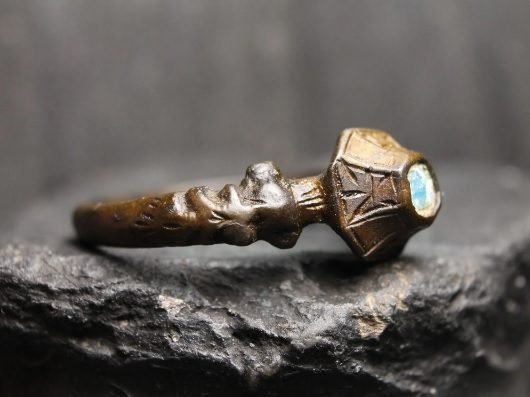
Roman rings were not always romantic in the modern sense. They could represent status, contract, authority, ownership, class, or marital intention. Some rings were made of iron, while others were made of gold, depending on social rank, wealth, and context. Over time, the ring became connected to the idea of a woman being promised in marriage.

This Roman layer is one of the strongest foundations of the modern engagement ring tradition. It connects the ring not only with beauty, but with social recognition. A promise became visible. A future marriage became publicly marked.

The Roman contribution is also important because it helps explain why the ring was worn on a particular finger. The tradition of the fourth finger and the later romantic idea of the vena amoris are often associated with Roman belief and later interpretation. Whether or not the anatomical idea was correct, the symbolic association became powerful and long-lasting.

Early Christian and Medieval Europe

As Christianity spread through Europe, the ring became increasingly integrated into religious marriage ceremonies. In the medieval period, marriage was not only a private union. It was a religious, social, legal, and family event. The ring became a visible sign of this union.

During this period, the distinction between engagement ring and wedding ring was not always clear. In some contexts, a ring could represent betrothal. In others, it could be part of the wedding ceremony itself. Sometimes the same ring carried multiple meanings: promise, dowry, consent, blessing, status, and marital bond.

This is important for modern readers because it explains why engagement rings and wedding bands are closely related but not identical. Their functions separated more clearly over time. Today, an engagement ring is usually given before marriage, while a wedding band is exchanged during the ceremony. But historically, these categories were more fluid.

For customers choosing bridal jewelry today, this history has practical value. A couple can choose a single symbolic ring, a traditional engagement ring and wedding band, or a complete bridal set designed together from the beginning. Leopard Jewelry supports this modern approach through Swiss-made bridal jewelry in 18K gold, including engagement rings, wedding rings, and custom matching sets.

Renaissance Courtship Rings

During the Renaissance, rings became more romantic, personal, and expressive. Courtship culture, family alliances, poetic inscriptions, and symbolic design all shaped the development of love jewelry.

Ring TypeMeaningModern Relevance
Fede ringsClasped hands symbolizing loyalty, trust, and agreementInspiration for symbolic custom rings
Gimmel ringsInterlocking bands representing unionInspiration for mechanical, layered, or matching bridal sets
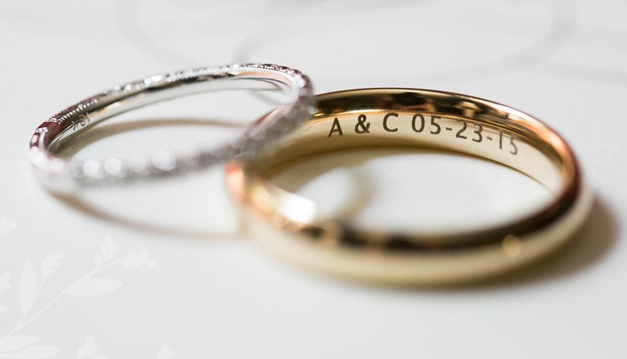
Posy ringsRings engraved with short love messagesInspiration for laser engraving and personalized wedding bands
Memento mori ringsLove, mortality, spiritual seriousnessInspiration for deeply symbolic or historical jewelry

Fede rings often showed two hands clasped together. Gimmel rings were made of two or more interlocking bands that could be worn separately before marriage and joined together during the wedding. Posy rings carried engraved love messages, often hidden inside the band. These forms show that engagement and marriage jewelry were never only about material value. They were also about message, secrecy, memory, and identity.

For a modern jewelry manufacturer, these historical designs are not dead museum objects. They are design sources. They can inspire custom engagement rings, engraved wedding bands, symbolic bridal sets, and private label bridal collections for brands that want more than standard commercial designs.

At Leopard Jewelry, this connection between history, design, and manufacturing is central to our bridal work. Whether the project is a custom ring for a private client or a bridal jewelry line for a professional brand, our Jewelry Services support the full process: concept development, CAD design, 18K gold production, stone sourcing, casting, setting, polishing, engraving, and quality control.


Engagement Ring vs Wedding Band: Historical and Modern Difference

The difference between an engagement ring and a wedding band may seem obvious today, but historically the distinction was not always clear. In the modern bridal jewelry market, an engagement ring is usually associated with the proposal, while a wedding band is exchanged during the marriage ceremony. But in earlier periods, one ring could represent several meanings at once: betrothal, marriage, dowry, family agreement, religious blessing, legal promise, social status, or personal devotion.

Understanding this difference is important for anyone studying the history of the engagement ring, but it is also practical for modern buyers. The engagement ring and wedding band are not just two separate pieces of jewelry. Together, they form a bridal set that must work visually, structurally, and emotionally.

A modern engagement ring is usually given during a proposal or formal engagement. It represents the intention to marry and is often worn before the wedding ceremony. The most recognizable modern engagement ring features a center stone. This may be a diamond, sapphire, ruby, emerald, or another natural gemstone. The center stone is often supported by a specific setting style, such as a solitaire, halo, three-stone, bezel, pavé, cathedral, split shank, or vintage-inspired design.

A wedding band is traditionally exchanged during the wedding ceremony. It represents the formal marriage bond and is usually designed for long-term daily wear. Compared with engagement rings, wedding bands are often simpler. Many are plain gold bands, half-eternity bands, pavé bands, channel-set bands, engraved bands, or matching couple rings. A wedding band may have diamonds or gemstones, but it usually does not have a large center stone like an engagement ring.

FeatureEngagement RingWedding Band
When it is givenProposal or formal engagementWedding ceremony
Main meaningPromise to marryFormal marriage bond
Typical designCenter stone, diamond or gemstoneSimpler band, sometimes with diamonds
Technical focusSetting, center stone, style, certificationComfort, durability, daily wear
Best planning methodDesigned with future wedding band in mindDesigned to fit engagement ring

A bridal set combines the engagement ring and wedding band as a coordinated pair. This is one of the most practical and elegant approaches in modern bridal jewelry because it solves a common problem: many engagement rings are beautiful alone, but difficult to match later with a wedding band.

Common bridal set combinations include a solitaire with a plain band, a halo ring with a curved band, a three-stone ring with a pavé band, or a fully custom matching bridal set designed from the beginning.

For modern couples, the best time to think about the wedding band is before the engagement ring is manufactured. If the engagement ring has a high solitaire setting, pairing is usually easier. If it has a low basket, halo, split shank, large side stones, or unusual geometry, the wedding band may need to be custom-shaped. Pavé and eternity bands also require careful sizing because resizing can be difficult or impossible without affecting the stones.

Leopard Jewelry supports both private and professional bridal jewelry projects through Swiss jewelry manufacturing services, including CAD development, 18K gold production, casting, stone setting, polishing, engraving, and private label/OEM support. Clients can explore the Engagement Ring Collection and Wedding Ring Collection as starting points for custom bridal jewelry or complete matching sets.


History of engagement rings timeline showing Roman betrothal rings, Renaissance fede and gimmel rings, Victorian cluster rings, and a modern diamond solitaire
A visual timeline of engagement ring history, from ancient Roman betrothal rings to Renaissance love rings, Victorian styles, and modern diamond solitaires.

Timeline: The History of the Engagement Ring from Antiquity to Today

The history of the engagement ring did not develop in a straight line. It evolved through legal customs, family agreements, religious ceremonies, royal marriages, gemstone discoveries, diamond cutting technology, marketing campaigns, and modern manufacturing standards.

PeriodStyle / DevelopmentHistorical ImportanceModern Relevance
Ancient RomeBetrothal ringsLegal and social promiseOrigin of engagement-style ring tradition
Medieval EuropeChurch ring ceremonyReligious formalizationWedding band tradition
RenaissanceFede, gimmel, posyRomance and symbolic messagesVintage/custom inspiration
1477Diamond betrothal ringElite diamond milestoneDiamond engagement ring origin story
18th centuryCluster ringsMore diamond availabilityHalo and cluster inspiration
19th centuryVictorian ringsSentimental motifsAntique-style rings
1886Tiffany settingRaised solitaire diamondModern solitaire standard
Art DecoStep cuts and geometryEmerald/Asscher popularityModern geometric bridal style
1947Diamond marketing eraMass diamond engagement cultureDiamond as bridal norm
21st centuryCustom/certified ringsTransparency and personalizationGIA/IGI/HRD, CAD, Swiss-made

In the ancient period, rings could represent authority, identity, ownership, agreement, protection, and social position. In ancient Rome, betrothal rings became especially important to the development of the engagement ring tradition because they connected rings with promise, public meaning, and future marriage.

During the medieval period, the ring became more deeply connected with Christian marriage ceremony and religious law. It became part of a public religious ritual rather than only a private or family agreement.

The Renaissance brought a more personal and romantic layer to engagement and marriage jewelry. Fede rings, gimmel rings, and posy rings gave jewelry private messages, interlocking forms, and emotional symbolism. These traditions still inspire modern custom rings, engraved wedding bands, and symbolic bridal sets.

One of the most famous milestones in diamond engagement ring history is the 1477 betrothal of Archduke Maximilian of Austria to Mary of Burgundy. This is one of the best-known early recorded diamond engagement rings in European history, not necessarily the first diamond engagement ring ever made. The importance of this moment is that it connected diamonds with aristocratic marriage, prestige, and engagement symbolism.

In the 18th century, diamond availability increased in Europe, partly due to Brazilian diamond discoveries. Cluster rings and decorative diamond arrangements became more visible. Before the modern solitaire became dominant, cluster rings allowed jewelers to create a larger visual effect using multiple smaller stones.

The 19th century brought Victorian sentiment and South African diamonds. Rings featured flowers, hearts, snakes, knots, colored gemstones, diamonds, and engraved details. Old mine cuts and old European cuts became associated with antique diamond jewelry. Victorian engagement rings often included colored gemstones as well as diamonds, which matters today because modern buyers are returning to more personal gemstone choices.

In 1886, Tiffany & Co. introduced a raised six-prong diamond setting that helped define the modern solitaire engagement ring. The design lifted the diamond above the band, allowing more light to enter the stone and making the center diamond more visible. This setting changed the visual language of bridal jewelry by making the diamond the main focus.

The early 20th century brought Edwardian delicacy and Art Deco geometry. Edwardian rings often used platinum, filigree, milgrain, and lace-like metalwork. Art Deco rings introduced stronger geometry, emerald cuts, Asscher cuts, baguettes, calibrated stones, and architectural forms. For B2B bridal jewelry manufacturing, Art Deco-inspired designs are especially relevant because they require precision in CAD, stone calibration, symmetry, setting, and finishing.

In 1947, the phrase “A Diamond Is Forever” became one of the most influential advertising slogans in jewelry history. Diamonds existed in engagement rings long before this campaign, but modern advertising helped make the diamond engagement ring a mass-market cultural standard.

In the 21st century, the engagement ring is more personal, more transparent, and more technically informed than ever before. Modern buyers ask whether the diamond is natural or lab-grown, whether the stone has a GIA, IGI, or HRD report, whether the ring is made in 18K gold, whether the design can be customized, whether the wedding band will fit, and who manufactures the ring.

Today, the history of the engagement ring continues not only through tradition, but through precision. The modern engagement ring is emotional, symbolic, commercial, and technical at the same time — and that is exactly why it remains one of the most powerful pieces in fine jewelry.


Engagement ring designs including solitaire, halo, three-stone, split shank, Toi et Moi, bezel, pavé, tension and colored gemstone rings
A luxury banner showing popular engagement ring designs, from solitaire, halo and three-stone rings to bezel, pavé, tension and colored gemstone styles.

History of Engagement Ring Designs

The history of engagement ring designs is one of the most commercially important parts of the history of the engagement ring. While the meaning of the engagement ring is rooted in promise, commitment, and marriage tradition, the design of the ring reveals how culture, craftsmanship, gemstones, technology, and personal taste changed over time.

Every engagement ring style carries a different message. A solitaire ring focuses attention on one center stone. A halo ring creates brilliance and visual size. A three-stone ring tells a symbolic story. A bezel setting offers protection and modern simplicity. A pavé engagement ring adds sparkle across the band. A colored gemstone engagement ring can express individuality, heritage, or emotional meaning.

StyleBest ForHistorical RootManufacturing Complexity
SolitaireClassic diamond focus19th century / Tiffany eraLow-medium
HaloMore sparkle and visual sizeCluster traditionMedium-high
Three-stoneSymbolic storytellingVictorian/Edwardian influenceMedium
Split shankArchitectural lookAntique and modern evolutionMedium-high
Toi et MoiRomantic dual-stone meaningHistoric court jewelryMedium
BezelProtection and modern styleAncient setting traditionMedium
PavéMaximum sparkleAdvanced setting craftHigh
TensionMinimalist engineeringModern 20th centuryVery high
Colored gemstoneIndividual personalityRoyal/aristocratic traditionDepends on stone

The fede ring is one of the most symbolic historical ring designs. The word “fede” comes from the Italian phrase mani in fede, meaning hands joined in trust. These rings usually show two hands clasped together, representing loyalty, agreement, friendship, and marital promise.

The gimmel ring is made from two or more interlocking bands. Traditionally, the bands could be separated and worn by different people during the engagement period, then joined together during the wedding ceremony. This made the gimmel ring both symbolic and mechanical: two parts becoming one.

Posy rings were engraved rings carrying short romantic messages, often hidden inside the band. They are one of the best historical examples of personalization in bridal jewelry. Long before modern laser engraving, people already wanted rings that carried private meaning.

The cluster ring is an important bridge between antique gemstone jewelry and modern halo engagement rings. A cluster ring features a group of smaller stones arranged together, often around a central stone or in a flower-like composition. Modern halo engagement rings owe much to this historical cluster tradition.

The solitaire engagement ring is the most iconic modern engagement ring design. It features one center stone, usually a diamond, placed as the main visual focus of the ring. Commercially, the solitaire remains one of the strongest engagement ring categories because it appeals to many buyers across cultures and generations.

The Tiffany-style solitaire helped define the modern diamond engagement ring. Its raised six-prong setting lifts the diamond above the band, allowing more light to reach the stone and making the center diamond the clear focus. For custom manufacturing, this type of ring requires careful engineering: prong thickness, stone seat, height, comfort, and wedding band compatibility must all be controlled.

A halo engagement ring features a center stone surrounded by smaller diamonds or gemstones. The halo increases sparkle and can make the center stone appear larger. Halo rings are commercially powerful but require reliable manufacturing quality because the small stones must be calibrated, aligned, and securely set.

A three-stone engagement ring features a center stone with one side stone on each side. It is often interpreted as a symbol of past, present, and future. The design is strong because it gives the ring more presence without relying only on one large center stone.

The Toi et Moi ring, meaning “you and me” in French, features two main stones representing two people or two souls. This design has returned strongly in modern bridal jewelry because it feels personal, artistic, and less conventional than a classic solitaire.

Split shank, cathedral, bypass, tension-set, pavé, bezel, and colored gemstone engagement rings all show how bridal jewelry has expanded beyond one standard form. Some designs prioritize brilliance. Others prioritize protection, engineering, symbolism, or individuality.

For modern buyers, understanding engagement ring designs helps with choosing the right ring for lifestyle, budget, symbolism, and long-term wear. For jewelry brands and retailers, design history is also commercially valuable because each style can become a separate bridal jewelry collection, product category, or private label line.

At Leopard Jewelry, engagement ring designs can be developed as custom one-of-a-kind pieces for private clients or as repeatable bridal jewelry models for B2B clients through Swiss-made CAD design, 18K gold manufacturing, casting, stone setting, polishing, engraving, and quality control.


Luxury engagement ring banner with diamond, sapphire, ruby, emerald, aquamarine, and colored gemstone rings in white gold and yellow gold displayed on cream marble.
A refined Swiss-style banner showcasing diamond and colored gemstone engagement rings in 18K white and yellow gold.

Diamonds and Natural Gemstones in Engagement Rings

The history of diamonds in engagement rings is one of the most important chapters in the wider history of the engagement ring. Today, many people immediately associate engagement rings with diamonds, but this connection was not always universal. Diamonds became dominant through a combination of rarity, royal prestige, cutting technology, expanding supply, marketing, and modern certification systems.

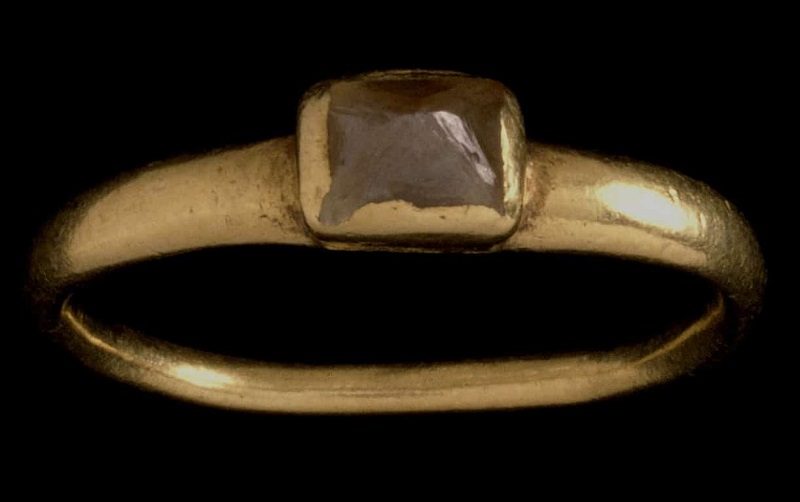
Diamonds were admired long before modern advertising made them a standard bridal choice. In the ancient and medieval worlds, diamonds were valued for hardness, rarity, and symbolic power. However, early diamonds were difficult to cut. Before advanced cutting tools and polishing techniques improved, diamonds often retained more of their natural crystal form. They did not show the same brilliance and fire that modern buyers expect from round brilliant cuts.

The 1477 diamond ring associated with Maximilian I and Mary of Burgundy is one of the best-known early recorded diamond engagement rings in European history. This moment helped place diamonds within the language of elite betrothal, but diamonds were still rare, difficult to cut, and accessible mainly to aristocratic families.

Diamond availability changed significantly over time. Brazilian diamond deposits in the 18th century increased supply to Europe. In the 19th century, South African diamond discoveries transformed the global diamond trade more dramatically. As supply expanded, jewelers developed more designs around diamonds, including cluster rings, old mine-cut rings, Victorian diamond rings, and later solitaire designs.

The rise of the solitaire engagement ring made diamond quality more important. If the ring has one main stone, that stone must carry the design. Cut, color, clarity, carat weight, shape, and certification become central to the purchasing decision.

The 20th century transformed the diamond engagement ring into a mass-market cultural standard. De Beers did not invent diamond engagement rings, but the 1947 slogan “A Diamond Is Forever” helped normalize the idea that a diamond ring was the expected symbol of engagement in modern consumer culture.

Modern diamond engagement rings are more transparent and technically evaluated than ever before. Buyers consider natural diamond versus lab-grown diamond, GIA/IGI/HRD reports, the 4Cs, traceability, cut quality, budget strategy, long-term value, setting quality, and metal choice.

But the history of the engagement ring is not only the history of diamonds. Long before the diamond solitaire became dominant, colored gemstones were powerful symbols of royalty, love, protection, wealth, identity, and spiritual meaning.

Sapphire is one of the strongest natural gemstones for engagement rings. Historically, blue sapphire has been associated with loyalty, wisdom, sincerity, protection, and nobility. It is also practical for daily wear because sapphire is durable and suitable for secure setting in 18K gold.

Ruby has long been associated with passion, power, love, vitality, courage, and royal authority. Its red color gives it one of the strongest emotional identities among natural gemstones. Like sapphire, ruby belongs to the corundum family and is suitable for serious bridal jewelry.

Emerald is one of the most elegant and historically prestigious gemstones used in fine jewelry. Its green color is associated with renewal, fertility, growth, harmony, beauty, and heritage. However, emerald requires more care than diamond, sapphire, or ruby because it is often more included and more vulnerable to impact.

Other natural gemstones can also be used in engagement rings, including aquamarine, morganite, spinel, alexandrite, tourmaline, garnet, and tanzanite. Each stone has its own color, symbolism, durability profile, and commercial positioning.

Best for Daily WearRequires More Care
DiamondEmerald
SapphireOpal
RubyPearl
Spinel, depending on qualityTanzanite
Alexandrite, depending on qualityMorganite
Some tourmalines

For B2C clients, colored gemstone bridal jewelry offers personalization beyond standard diamond rings. For B2B clients, it creates opportunities for differentiated collections: sapphire bridal rings, ruby engagement rings, emerald halo rings, birthstone bridal jewelry, zodiac-inspired engagement rings, and royal-style gemstone rings.

At Leopard Jewelry, colored gemstone engagement rings can be designed and manufactured in 18K gold with Swiss-made craftsmanship. The process can include gemstone sourcing, CAD design, casting, stone setting, polishing, laser engraving, and quality control. Clients can explore the Bridal Jewelry Collection or begin a custom or professional manufacturing project through Jewelry Services.


Engagement ring diamond shapes guide showing round, oval, cushion, princess, emerald, radiant, Asscher, marquise, pear and heart cut diamond rings by Leopard Jewelry
A visual guide to engagement ring diamond shapes, including round, oval, cushion, princess, emerald, radiant, Asscher, marquise, pear and heart cuts.

Diamond Shapes, Gemstone Cuts and Setting Techniques

A ring’s beauty is not determined only by the gemstone itself. It is also shaped by how the stone is cut, proportioned, faceted, polished, and set. In early engagement rings, gemstones often looked very different from modern diamonds. Many stones were polished, cabochon-cut, table-cut, or rose-cut. Modern brilliant cuts developed gradually through improvements in tools, mathematics, optical understanding, and cutting technology.

Shape and cut are related but not identical. Shape means the outline of the gemstone when viewed from above: round, oval, pear, cushion, emerald, marquise, princess, radiant, or heart. Cut means the facet arrangement, proportions, symmetry, polish, and light performance of the stone.

ShapeBest For
RoundClassic brilliance and timeless appeal
OvalLarger visual size and elegant finger lengthening
EmeraldQuiet luxury, clarity, and Art Deco refinement
CushionRomantic vintage style and soft geometry
PearElegant, distinctive, graceful silhouette
PrincessModern geometry and strong sparkle
MarquiseDramatic elongation and maximum visual spread
AsscherArt Deco identity and geometric sophistication
RadiantBrilliance with rectangular or square structure
HeartDirect romantic symbolism

Early diamond cuts, such as point cuts and table cuts, preserved more of the natural crystal shape. Rose cuts offered a soft glow and antique character. Old mine cuts and old European cuts brought more light performance and remain popular for vintage-inspired engagement rings. The modern round brilliant cut became the standard for maximum diamond brilliance. Cushion, emerald, Asscher, oval, pear, princess, radiant, marquise, and heart shapes all offer different identities for modern bridal jewelry.

The setting is the bridge between the stone and the ring. It controls how the gemstone looks, how much light reaches it, how safe it is during daily wear, and how difficult the ring is to manufacture.

Settings affect durability, sparkle, stone security, maintenance, style, production cost, CAD planning, casting complexity, stone-setting labor, quality control, and after-sales service.

A bezel setting is one of the oldest and most protective gemstone setting methods. It surrounds the gemstone with a rim of metal and is especially useful for active lifestyles, low-profile engagement rings, colored gemstones, emeralds, modern minimalist rings, and clients who do not want sharp prongs.

A prong setting is one of the most common engagement ring settings. Small metal claws hold the gemstone in place, allowing more light and visibility. Six-prong solitaire settings provide strong security and classic identity, while four-prong settings show more of the stone and create a more open look.

Pavé setting uses many small diamonds set closely together across the surface of the ring. Micro-pavé is even more delicate and labor-intensive. These settings create strong sparkle but require precision, careful metal thickness, skilled setting, and final inspection.

Channel setting places stones between two metal walls. Flush setting places the stone into the surface of the metal. Tension setting holds the gemstone by pressure and requires serious engineering. Invisible setting creates the appearance of a continuous gemstone surface but is complex, risky, and suitable only for carefully engineered designs.

Setting choice has a direct impact on engagement ring cost.

Setting TypeCost / Complexity LevelReason
Simple prong solitaireLow to mediumFewer stones, flexible production
Bezel settingMediumRequires clean metal shaping
Four-prong / six-prong center settingMediumPrecision needed for stone security
Halo settingMedium to highSmall stones, alignment, symmetry
Pavé settingHighMany small stones and detailed setting work
Micro-pavé settingVery highMagnification, delicate labor, higher risk
Channel settingMedium to highCalibrated stones and clean channels
Tension settingVery highEngineering, pressure, metal strength
Invisible settingVery highCalibrated stones and advanced skill

For private clients, this explains why two rings with similar gold weight and stone size can have very different prices. For B2B clients, this is essential for pricing strategy and collection planning.

At Leopard Jewelry, gem setting is treated as both an aesthetic and technical part of engagement ring manufacturing. Leopard Jewelry uses CAD planning, casting preparation, precise stone seats, professional stone setting, polishing, laser engraving, and final inspection to ensure that every engagement ring is not only visually refined, but also suitable for long-term use.


Ring Size, Certification and 18K Gold Standards

Ring size may seem like a simple technical detail, but it is one of the most important practical factors in engagement ring and wedding band manufacturing. A ring can have a beautiful diamond, perfect setting, and excellent finish, but if the size is wrong, the client cannot wear it comfortably.

As rings became more commercial, international, and technically complex, accurate sizing became essential. Local jewelers once used their own gauges and mandrels, but modern jewelry requires clearer standards because rings are ordered, manufactured, resized, shipped, and sold across borders.

The European ring size system is commonly based on the inner circumference of the ring in millimeters. For example, EU 54 means the inner circumference of the ring is approximately 54 mm. The US and Canada use numerical sizes, often with half and quarter sizes. The UK, Australia, and Ireland use alphabetical sizes. Russian sizes are often based on inner diameter, and Japanese sizes use another numerical system.

Engagement rings need more accurate sizing than simple fashion rings because they are more valuable, more complex, and more difficult to adjust after production. Center stones rotate if the ring is too loose. Pavé bands are hard to resize. Eternity bands may be impossible to resize. Wide bands feel tighter. Engraving can be affected by resizing. Bridal sets must align properly.

For custom engagement rings and wedding bands, Leopard Jewelry recommends confirming ring size before production, especially for pavé, halo, eternity, split shank, and complex custom designs.

Certification is another modern standard. The modern engagement ring market is built on trust. In the past, buyers often depended almost entirely on the reputation of the jeweler. Today, diamonds move through international supply chains, and buyers compare stones, prices, reports, origins, and quality grades before making a decision.

GIA is one of the most recognized gemological authorities and helped establish the modern language of the 4Cs: cut, color, clarity, and carat weight. IGI reports are widely used in global retail and jewelry trade, especially in commercial diamond jewelry and lab-grown diamond markets. HRD Antwerp is an important European diamond grading authority connected to Antwerp’s diamond trade.

4CMeaningWhy It Matters
CutProportions, facet quality, polish, symmetry, light performanceStrongly affects brilliance and sparkle
ColorHow colorless or tinted the diamond appearsInfluences rarity and value
ClarityInternal inclusions and external blemishesAffects transparency, rarity, and sometimes durability
Carat WeightWeight of the diamondAffects size, price, and visual impact

Many customers use the word “certificate,” but laboratories usually issue grading reports rather than guarantees of future value. A grading report documents the characteristics of a stone at the time it is examined. It is not the same as an appraisal, resale guarantee, investment promise, or insurance valuation.

Modern diamond buyers also need clear disclosure: natural diamond, lab-grown diamond, treated diamond, enhanced stone, or imitation. For private clients, disclosure protects the buying decision. For B2B clients, it protects the brand.

Metal choice is equally important. 24K gold is very pure, but it is usually too soft for most engagement rings, especially designs with prongs, pavé, halos, or delicate stone settings. 18K gold contains 75% gold and is alloyed for better strength, color, and wearability.

18K yellow gold is classic, warm, and historical. 18K white gold is modern, bright, and diamond-focused, often rhodium plated. 18K rose gold is romantic, warm, and contemporary. Platinum is dense, naturally white, and premium, but 18K gold remains highly versatile because it offers multiple colors, strong fine-jewelry value, and excellent suitability for custom bridal designs.

Leopard Jewelry produces engagement rings in 18K gold with Swiss-made finishing, precise stone setting, custom design options, laser engraving, and quality control for both private clients and professional jewelry brands.


Swiss private label jewelry manufacturing process with CAD design software, blue wax prototype ring, gold production model, and finished diamond engagement ring
Leopard Jewelry’s Swiss-made OEM manufacturing workflow showcasing CAD engineering, wax prototyping, gold model development, and finished luxury diamond ring production.

How Engagement Rings Are Made Today

Modern engagement rings combine tradition with technology. Historically, rings were shaped by hand, cast in simple molds, engraved manually, and set with available gemstones. Today, the process is more controlled, more precise, and more suitable for both custom one-of-a-kind jewelry and scalable B2B production.

The process usually begins with design consultation. The client chooses the general style, stone type, gold color, budget, ring size, and design direction. For private clients, this may mean choosing between a solitaire, halo, three-stone, pavé, bezel, sapphire ring, ruby ring, emerald ring, or custom bridal set. For B2B clients, the consultation is more technical: repeatable models, multiple sizes, stone options, production feasibility, collection pricing, and private label finishing.

CAD design is one of the most important parts of modern engagement ring manufacturing. CAD allows the ring to be digitally modeled before production. It controls stone dimensions, band width, prong thickness, gold weight, comfort, setting structure, pavé layout, engraving area, and wedding band fit.

After CAD design, the model may be prepared as a 3D print or wax pattern for casting. This step allows the digital design to become a physical object and helps validate form, proportion, and scale before the final metal piece is made.

Lost-wax casting is one of the main production methods for many custom engagement rings. In this process, the wax or resin pattern is invested in a casting material, burned out, and replaced with molten metal. For 18K gold engagement rings, casting quality is critical. Porosity, incomplete filling, shrinkage, rough surfaces, or weak prongs can create serious problems later.

After casting, the ring is pre-finished. This includes cleaning, filing, removing sprues, refining surfaces, correcting small casting marks, preparing prongs, and refining stone seats. Pre-finishing is often invisible to the customer, but it strongly affects final quality.

Stone setting is the stage where the center stone, side stones, pavé diamonds, halo stones, or channel-set stones are secured into the ring. Stone setting is one of the clearest signs of fine jewelry quality. Poor stone setting can lead to loose stones, uneven prongs, rough surfaces, weak symmetry, and customer complaints.

After setting, the ring is polished and finished. The finish may be high polish, satin, matte, brushed, or a combination of textures. White gold may also be rhodium plated if required. Laser engraving can add names, dates, initials, messages, hallmarks, logos, model numbers, or private label marks.

Quality control is the final protection before the ring reaches the client. A professional engagement ring should be checked for stone security, prong alignment, pavé quality, ring size, symmetry, surface finish, polish, engraving accuracy, metal documentation, weight, comfort, and wedding band fit.

For brands, designers, and retailers, Leopard Jewelry can support engagement ring development from concept to finished collection, including CAD design, production, stone sourcing, setting, finishing, laser engraving, and private label/OEM manufacturing. Through Jewelry Services, Leopard Jewelry supports private clients and B2B partners with Swiss-made bridal jewelry manufacturing in 18K gold.


Client choosing an engagement ring in a Swiss jewelry atelier with diamond rings, gemstone rings, ring size gauge, loupe and grading report
A luxury bridal consultation scene showing engagement ring selection, ring sizing, gemstone comparison and diamond review in a Swiss jewelry atelier.

B2C Guide: How to Choose an Engagement Ring Today

Choosing an engagement ring today is both emotional and technical. The ring should express love and commitment, but it should also be practical, durable, correctly sized, and professionally made.

The best engagement ring is not always the biggest or most expensive ring. It is the ring that fits the person, the lifestyle, the symbolism, the budget, and the long-term plan for wearing it with a wedding band.

First, choose the ring style. A solitaire is timeless and focuses on one stone. A halo adds brilliance and visual size. A three-stone ring tells a symbolic story. Pavé adds sparkle across the band. A bezel offers protection and modern simplicity. A split shank creates architectural presence. A vintage-inspired ring adds historical romance. A colored gemstone ring expresses personal identity.

Next, choose the center stone. Diamonds are the most common modern choice, but sapphire, ruby, emerald, aquamarine, spinel, alexandrite, tourmaline, and other natural gemstones can also be meaningful. Diamond is the most durable and widely recognized engagement ring stone. Sapphire and ruby are excellent for daily wear. Emerald is beautiful but needs more care.

Then choose the shape. Round feels classic. Oval can look larger and elongate the finger. Emerald cut feels refined and architectural. Cushion feels romantic. Pear feels graceful. Marquise creates drama. Princess offers modern geometry. Asscher and radiant cuts create strong design identity.

Metal choice matters. 18K yellow gold is classic and warm. 18K white gold is modern and diamond-focused. 18K rose gold is romantic and contemporary. Platinum is dense, naturally white, and premium. For most fine bridal jewelry, 18K gold offers an excellent balance of luxury, durability, and stone-setting performance.

The setting should match the lifestyle. A prong setting gives more visibility to the stone. A bezel setting gives more protection. Pavé adds sparkle. Channel setting is smooth and structured. Tension setting looks modern but requires precise engineering. Invisible setting is complex and should be used selectively.

For valuable diamonds, a GIA, IGI, HRD, or other recognized grading report is recommended. Ring size should be confirmed before production, especially for pavé, halo, eternity, split shank, and complex designs.

Finally, think about the wedding band before the engagement ring is finalized. Many buyers choose the engagement ring first and only later discover that a straight wedding band does not fit well beside it. Designing both rings together improves fit, comfort, visual harmony, and long-term wearability.

Explore Swiss-made engagement rings in 18K gold or request a custom bridal jewelry design through Leopard Jewelry. Whether you prefer a classic solitaire, a diamond halo, a sapphire center stone, a ruby engagement ring, an emerald ring, or a fully personalized engagement ring, our team can guide you from design to finished jewelry.

Clients can explore the Engagement Ring Collection, view Wedding Rings, discover the full Bridal Jewelry Collection, or begin a custom project through Jewelry Services.


B2B Guide: Engagement Ring Manufacturing for Brands, Designers and Retailers

Engagement rings and wedding bands are among the strongest categories in fine jewelry. They carry emotional value, high purchase intent, and long-term customer importance. For jewelry brands, designers, and retailers, bridal jewelry can become a core commercial category if it is produced with the right quality, consistency, and positioning.

Bridal jewelry is commercially powerful because it is connected to life events. Engagement, marriage, anniversaries, and bridal sets create strong emotional motivation and clear buying intent. A customer who trusts a brand for an engagement ring may return for wedding bands, anniversary gifts, birthstone jewelry, children’s jewelry, or custom projects.

A professional bridal jewelry manufacturer must offer more than basic production. B2B clients often need CAD development, stone sourcing, 18K gold production, consistent sizing, repeatable models, private label production, finishing standards, quality control, documentation, reliable communication, and clear pricing structure.

OEM engagement ring production is suitable for brands that already have their own designs, CAD files, sketches, or collection concepts. The manufacturer’s role is to produce the jewelry according to the brand’s specifications.

Private label bridal jewelry is ideal for retailers, new brands, or established businesses that want ready-to-sell engagement rings and wedding bands under their own brand identity. A private label bridal collection may include classic solitaires, halo rings, pavé engagement rings, three-stone rings, matching wedding bands, gemstone engagement rings, bridal sets, and anniversary bands.

Custom bridal jewelry development is suitable for designers and brands that want original pieces or special collections. This may begin with a sketch, mood board, reference image, gemstone selection, or design concept. The process can include design review, technical feasibility, CAD modeling, stone size planning, gold weight estimation, prototype or wax model, casting, setting, finishing, engraving, and final quality control.

Not all engagement ring designs have the same production complexity.

Design TypeComplexity
Simple solitaireLower complexity
Halo ringMedium-high complexity
Pavé split shankHigh labor and QC
Tension settingHigh engineering risk
Eternity bandSizing and setting complexity
Invisible settingAdvanced calibration and risk

For B2B clients, understanding complexity is essential for pricing. The cheapest-looking design is not always the cheapest to manufacture. A delicate micro-pavé ring may require more labor and risk than a heavier plain gold ring.

Swiss-made jewelry manufacturing carries strong commercial value because Switzerland is associated internationally with precision, reliability, clean execution, and high-quality standards. For bridal jewelry, this matters because engagement rings are trust-based products. Clients expect the ring to be beautiful, but they also expect it to be secure, properly finished, accurately sized, and professionally made.

For jewelry brands, designers, and retailers, Leopard Jewelry offers Swiss-made bridal jewelry manufacturing in 18K gold with CAD development, casting, stone setting, polishing, laser engraving, quality control, and private label/OEM support. Professional clients can start through Jewelry Services to discuss design direction, material, stone options, quantity, budget, production feasibility, and timeline.


FAQ: History and Buying Guide for Engagement Rings

Who invented the engagement ring?

No single culture can be credited with inventing the modern engagement ring. The history of the engagement ring developed through several civilizations, traditions, and historical stages. Ancient Egypt contributed circle symbolism, while ancient Rome provides stronger evidence for betrothal-style rings connected to marital intention, family agreement, and social recognition.

What is the oldest engagement ring in history?

The oldest engagement ring in history depends on how “engagement ring” is defined. If we mean symbolic rings connected with status, love, or marital identity, several ancient cultures are relevant. If we mean stronger evidence for a ring connected with betrothal or marital intention, Roman betrothal rings are among the clearest early examples. The 1477 diamond ring associated with Maximilian I and Mary of Burgundy is one of the most famous early diamond engagement ring references.

Did diamond engagement rings exist before De Beers?

Yes. Diamond engagement rings existed before De Beers and before the 20th-century diamond marketing era. De Beers did not invent diamond engagement rings, but the 1947 slogan “A Diamond Is Forever” helped make the diamond engagement ring a mass-market cultural standard.

What is the difference between an engagement ring and a wedding band?

An engagement ring is usually given before marriage, often during a proposal or formal engagement. It commonly features a center stone. A wedding band is exchanged during the wedding ceremony and represents the formal marriage bond. For the best comfort and visual harmony, many couples design the engagement ring and wedding band together as a bridal set.

What is the most classic engagement ring style?

The solitaire diamond engagement ring is the most classic modern engagement ring style. It features one center stone, usually a diamond, as the main visual focus. Its strength is simplicity, elegance, and long-term style stability.

What is the best metal for an engagement ring?

18K gold is one of the strongest fine-jewelry standards for engagement rings because it balances luxury, durability, and stone-setting performance. 24K gold is very pure, but it is usually too soft for most engagement rings. Platinum is also a premium option, but 18K gold offers strong versatility in yellow, white, and rose colors.

Are natural gemstones suitable for engagement rings?

Yes, natural gemstones can be suitable for engagement rings, but the choice depends on durability, setting design, and lifestyle. Diamond, sapphire, and ruby are among the strongest options for daily wear. Emerald can also be used, but it requires more care and protective setting design.

Should an engagement ring have a certified diamond?

For valuable diamond engagement rings, a GIA, IGI, HRD, or other recognized grading report is recommended. A diamond report helps document carat weight, color, clarity, cut information, measurements, polish, symmetry, and other characteristics. It supports trust, comparison, insurance documentation, and B2B product presentation.

Can Leopard Jewelry make a custom engagement ring?

Yes. Leopard Jewelry creates custom engagement rings in 18K gold with Swiss-made craftsmanship. Services can include design consultation, CAD development, natural diamond or gemstone sourcing, certified diamonds on request, 18K gold manufacturing, casting, stone setting, polishing, laser engraving, and final quality control.

Does Leopard Jewelry offer B2B bridal jewelry manufacturing?

Yes. Leopard Jewelry supports jewelry brands, designers, and retailers with B2B bridal jewelry manufacturing, including OEM and private label production. B2B services can include CAD design, technical development, 18K gold production, stone sourcing, casting, stone setting, polishing, laser engraving, quality control, and repeatable bridal jewelry manufacturing.


Create a Swiss-Made Engagement Ring with Leopard Jewelry

The engagement ring has survived for thousands of years because it represents something deeper than decoration. It is a promise, a symbol of continuity, a sign of love, and often the first piece of fine jewelry in a couple’s shared future.

Today, the best engagement rings combine history, emotion, material value, technical precision, and personal meaning. Whether the design is a classic diamond solitaire, a sapphire engagement ring, a ruby center stone, a diamond halo ring, a three-stone design, a vintage-inspired piece, or a fully custom bridal set, the ring must be beautiful, secure, wearable, and professionally made.

At Leopard Jewelry, engagement rings are created in 18K gold with Swiss-made craftsmanship, natural gemstones, certified diamonds on request, precise stone setting, polished finishing, laser engraving, and quality control.

For private clients, a custom engagement ring can be developed around your preferred diamond or natural gemstone, ring style, gold color, setting type, ring size, wedding band fit, engraving, budget, and personal symbolism.

For professional clients, Leopard Jewelry offers Swiss-made bridal jewelry manufacturing in 18K gold, including CAD design, casting, stone setting, polishing, laser engraving, quality control, and private label/OEM production. This service is suitable for jewelry brands developing engagement ring collections, retailers looking for private label bridal jewelry, designers who need technical development and production, and businesses requiring repeatable 18K gold wedding bands.

Explore our Engagement Ring Collection, discover our Wedding Ring Collection, view the full Bridal Jewelry Collection, or start a custom or B2B project through Jewelry Services.

For couples, Leopard Jewelry creates meaningful Swiss-made engagement rings in 18K gold. For brands, designers, and retailers, Leopard Jewelry provides professional bridal jewelry manufacturing with Swiss precision, fine jewelry craftsmanship, and B2B production support.

Follow Leopard Jewelry:

Leave a Reply

Your email address will not be published. Required fields are marked *