














Why the Signet Ring Still Matters
A signet ring is more than a ring; it is a personal symbol of identity, heritage, authority, and craftsmanship. Few jewelry pieces carry such a long historical memory. Long before modern luxury jewelry became associated with fashion, branding, or personal style, the signet ring already existed as a powerful object of recognition. It could seal a document, represent a family, identify a ruler, protect a name, mark ownership, express faith, or communicate social rank.
Today, the signet ring has returned as one of the most meaningful forms of fine jewelry. It is no longer limited to aristocratic families, royal courts, or official seals. A modern gold signet ring can be a family crest ring, a monogram ring, a pinky signet ring, a diamond signet ring, a personal emblem ring, a corporate identity ring, or a fully custom 18K gold heirloom.
The reason the signet ring still matters is simple: it combines identity and permanence. A chain can be decorative. A bracelet can be fashionable. A gemstone ring can be beautiful. But a signet ring speaks directly about the person who wears it. It can carry initials, a coat of arms, a symbol, a motto, a religious sign, a zodiac motif, a company logo, or a private design known only to the wearer.
This is why signet rings are still relevant in the modern jewelry market. They connect ancient seal culture with modern personal branding. They connect family history with contemporary style. They connect traditional goldsmithing with CAD design, laser engraving, hand finishing, and Swiss-made fine jewelry manufacturing.
At Leopard Jewelry Atelier, this heritage is developed through custom 18K gold signet rings, Swiss-made jewelry craftsmanship, CAD design, casting, engraving, stone setting, polishing, and quality control. Private clients can explore custom signet rings in 18K gold, while brands, designers, and retailers can use our Swiss jewelry manufacturing services for OEM, private label, and bespoke signet ring production.
A signet ring is not only something you wear. It is something you authorize, inherit, design, and leave behind.

What Is a Signet Ring?
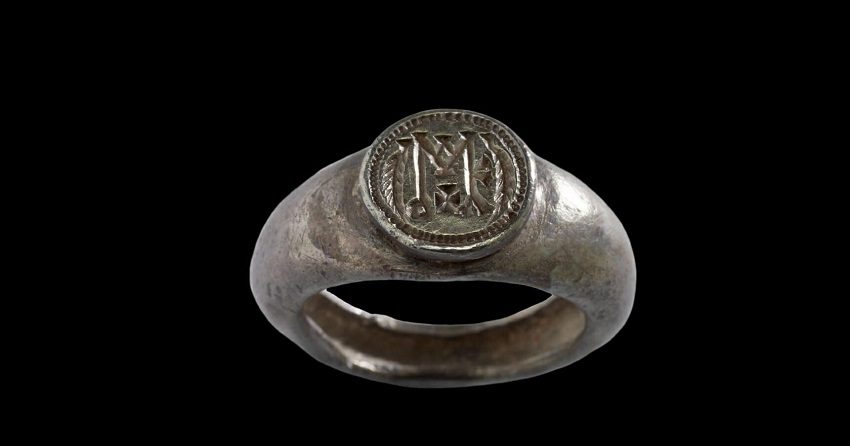
A signet ring is a ring with a flat, raised, or engraved face traditionally used to display a symbol of identity. This symbol may be a family crest, coat of arms, initials, monogram, seal, religious motif, personal emblem, brand logo, or decorative design.
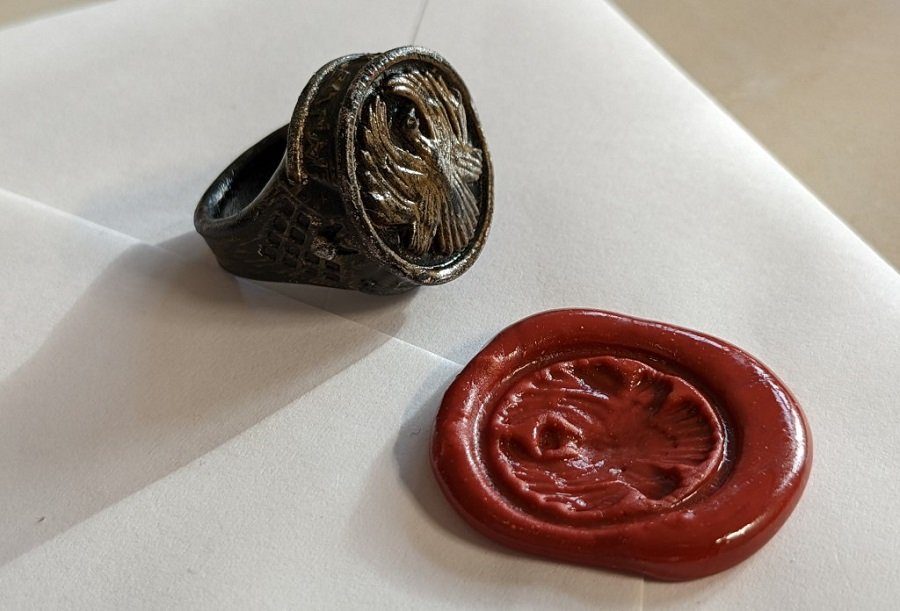
Historically, signet rings were often engraved in reverse so they could be pressed into wax, clay, or another soft material to create a readable impression. In that sense, the ring functioned almost like a personal signature. It was not merely decorative; it could authenticate letters, documents, orders, property, or authority.
The most recognizable signet ring design has a wide top surface, often called the bezel or face. This surface gives the jeweler space for engraving, gemstone setting, enamel, intaglio carving, or relief work. Modern signet rings can be oval, cushion-shaped, round, square, rectangular, shield-shaped, octagonal, navette-shaped, or completely custom.
A signet ring may be simple or complex. A minimal solid gold signet ring may carry only clean polished metal. A traditional family crest signet ring may include deep engraving. A luxury diamond signet ring may include pavé diamonds, flush-set stones, or a gemstone face. A modern personalised signet ring may use initials, a logo, or a symbolic design created specifically for the client.
Signet Ring vs Seal Ring
The terms signet ring and seal ring are closely related, but they are not always identical in modern usage.
Historically, a signet ring could act as a seal. The engraved design on the ring was pressed into wax or clay to create an impression. This impression identified the owner and could confirm authenticity. A seal ring is therefore a ring made specifically for sealing. A historical signet ring often served this same purpose.
Modern signet rings, however, are usually not used for legal sealing. Today, most signet rings are symbolic, decorative, personal, or brand-related. A person may wear a men’s signet ring with initials, a woman may wear a small gold signet ring with a monogram, a company may create private label signet rings with a logo, and a family may commission an 18K gold crest ring as an heirloom.
For clients, the most important question is this: do you want your ring to be historically seal-functional, with reverse engraving for wax impressions, or do you want it to be visually readable on the ring itself? This decision affects the artwork, engraving direction, depth, and production method.
Intaglio, Cameo, Crest, Monogram and Bezel
To understand signet rings properly, several technical and historical terms are useful.
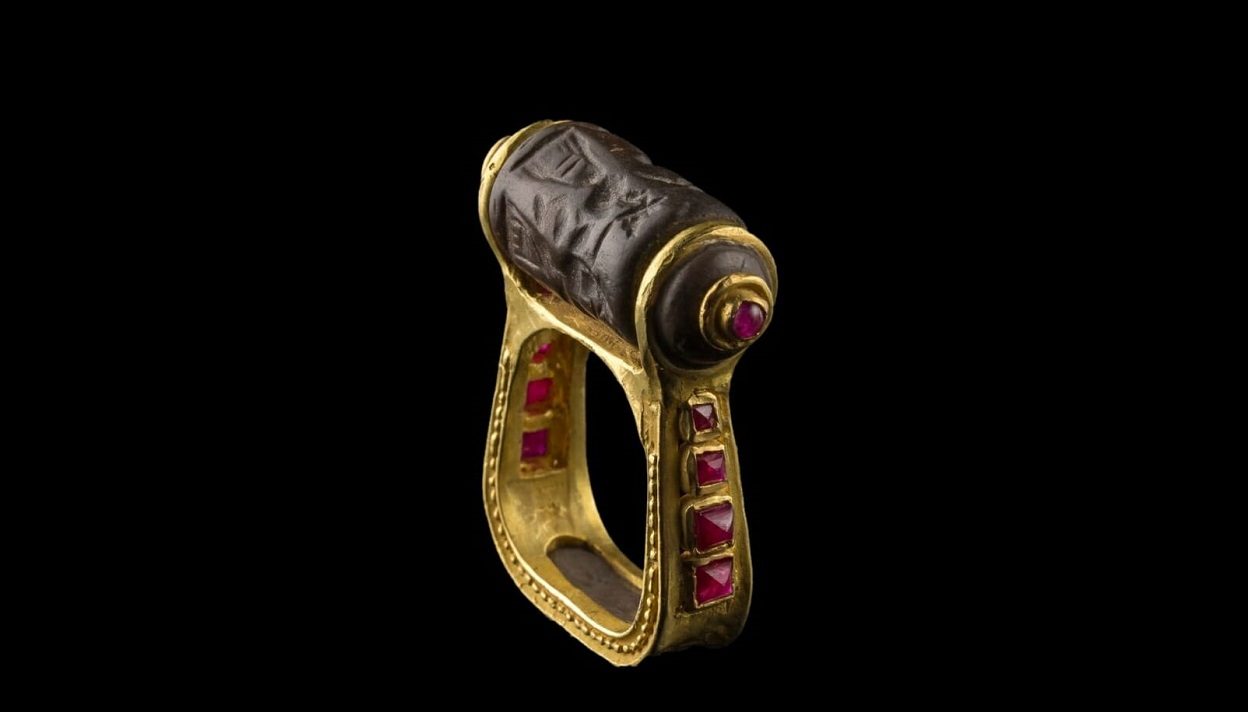
Intaglio means the design is carved into the surface. In ancient seal rings, intaglio carving allowed the design to create a raised image when pressed into wax or clay. Many ancient Egyptian, Greek, Roman, and later European seal rings used intaglio gemstones.
Cameo or relief is the opposite idea. Instead of being carved into the surface, the design is raised above the background. Cameo work is more visible as decoration, while intaglio is more closely connected to sealing.
Bezel refers to the flat or raised face of the signet ring. This is the main area used for engraving, gemstone setting, enamel, initials, or crest work.
Crest is often used casually to mean a family symbol, but in heraldry it has a more specific meaning. A crest is usually one part of a full coat of arms, not always the entire heraldic achievement. For a professional family crest ring, it is important to understand whether the client wants a crest, full coat of arms, shield, motto, initials, or a simplified emblem.
Monogram means initials or letters arranged as a personal design. Monogram signet rings are popular because they offer personal identity without requiring formal heraldry. A monogram can be classic, modern, minimal, script-style, geometric, or combined with diamonds and gemstones.
A strong historical example of intaglio signet culture is the Walters Art Museum’s Egyptian Intaglio with Ptah and the Name Amun-Re Set in a Swivel Ring, dated 664–322 BCE and made from green jasper and gold. This type of museum object shows how ancient rings combined precious material, religious symbolism, engraving, and seal function long before modern jewelry branding existed.

A Short History of Signet Rings
The history of the signet ring is the history of identity made wearable. Across thousands of years, signet rings have moved through temples, palaces, courts, trade routes, administrative systems, noble families, religious institutions, and modern jewelry ateliers.
A signet ring could be an official seal, a portrait, a family mark, a protective symbol, a royal emblem, a gentleman’s jewel, or a personal luxury object. This long evolution is exactly why signet rings are so powerful today. When a modern client commissions a custom signet ring, they are not only buying a gold ring. They are joining one of the oldest traditions in jewelry.
Ancient Egypt and the Birth of Seal Rings
Ancient Egypt is one of the most important civilizations in the early history of seal rings. Egyptian culture used symbols, names, divine figures, scarabs, hieroglyphs, and protective motifs in jewelry and seal objects. Rings could communicate identity, religious devotion, authority, and protection.
Ancient Egyptian seal rings were not simply decorative. They could serve as personal and administrative identifiers. In a society where names, titles, gods, and official marks carried enormous power, a ring could become a portable symbol of recognition. Scarab seals, swivel rings, and engraved gemstones show how closely jewelry and identity were connected.
Materials used in Egyptian seal rings included gold, jasper, faience, carnelian, and other stones. Gold expressed status and sacred value. Gemstones added color, symbolism, and durability. A swivel ring could allow the engraved stone to rotate, making the object both functional and ornamental.
For a modern jewelry manufacturer, ancient Egyptian seal rings offer an important lesson: the signet ring was never only about shape. It was always about meaning engraved into material.
Greek, Aegean and Hellenistic Signet Traditions
Greek, Aegean, and Hellenistic cultures developed rich traditions of engraved gemstones and seal stones. These objects often featured mythological animals, gods, heroes, warriors, griffins, lions, deities, and symbolic scenes. The craftsmanship could be extremely fine, especially when small gemstones were carved with detailed figures.
In these cultures, a signet ring or engraved gem could operate on several levels at once. It could act as a seal, a status object, an amulet, a work of art, and a personal mark. The wearer carried an image that could represent protection, mythological power, family identity, political allegiance, or refined taste.
This world of engraved gems is essential to the history of the signet ring because it shows the rise of glyptic art: the art of carving gemstones. Later Roman, medieval, and Renaissance signet traditions inherited and revived many of these ideas.
Roman Signet Rings and Political Identity
Roman signet rings are among the most important examples in the history of personal identity jewelry. In Roman society, rings could show rank, authority, citizenship, family position, political identity, and personal taste. Roman elites used engraved gemstones and intaglio rings to mark ownership, authenticate documents, and display portraits or symbols.
Roman signet rings often used gemstones such as carnelian, jasper, agate, sardonyx, and onyx. Carnelian was especially popular for intaglio work because of its warm color and carving qualities. Portraits, gods, military symbols, animals, and mythological scenes could all appear on Roman ring stones.
A strong museum example is The Metropolitan Museum of Art’s Gold ring with carnelian intaglio portrait of Tiberius, dated ca. 14–37 CE. The object combines gold, carnelian, portraiture, imperial identity, and the Roman tradition of engraved gems in a single ring.
The Roman signet ring proves one important point: personal branding is not new. Before modern logos, business cards, and digital signatures, people used symbols carved into stone and gold.
Medieval Signet Rings and Christian Symbolism
During the medieval period, signet rings became closely connected with religion, authority, and social hierarchy. Kings, nobles, bishops, merchants, and officials used seals to authenticate documents and mark identity. Rings and seal matrices carried symbols that could represent office, family, faith, or legal power.
Christian symbolism became especially important. Medieval signet rings and seal objects could include saints, crosses, religious inscriptions, Latin words, devotional images, and sacred symbols. Some rings also reused antique engraved gems from Greece or Rome, placing ancient stones into medieval settings. This created a layered object: an ancient image carrying new medieval meaning.
In design terms, medieval signet rings influence modern jewelry through Gothic lettering, Latin inscriptions, shield shapes, religious symbols, seal-style engraving, heavy gold forms, family identity, and deep intaglio work.
Renaissance Heraldry and Family Crest Rings
The Renaissance brought renewed fascination with ancient engraved gems, classical learning, heraldry, noble identity, and court culture. Collectors studied antique gems, artists revived carving traditions, and aristocratic families used symbolic jewelry to communicate power, lineage, and refinement.
This period is especially important for the modern family crest ring. Heraldry became a visual language of family, rank, inheritance, and authority. A coat of arms was not merely decoration. It represented lineage, rights, alliances, and social identity.
A family crest signet ring developed naturally from this culture. The ring could carry a shield, crest, motto, helmet, supporters, initials, or simplified heraldic device. When engraved in reverse, it could also be used to seal wax.
For modern clients, this remains one of the strongest reasons to commission a custom signet ring. A family crest ring is not trend-based jewelry. It is an heirloom object. It can be made for a father, son, daughter, wedding, anniversary, family event, or inheritance gift.
At Leopard Jewelry Atelier, this type of project requires careful preparation. The artwork must be cleaned, simplified if necessary, adapted to the ring face, and prepared for engraving. A complex coat of arms may need technical interpretation so it remains readable on a small gold surface. This is where CAD design, engraving knowledge, and manufacturing experience become essential.
Royal Signet Rings and Dynastic Identity
Royal signet rings are among the most fascinating historical examples because they combine jewelry, politics, dynastic identity, and power. The British Museum holds a signet ring connected to Mary, Queen of Scots, described as bearing her coat of arms. This kind of object shows the signet ring at its highest symbolic level.
A royal signet was not only personal jewelry. It could represent sovereignty, marriage alliances, territorial claims, and political legitimacy. For a modern article about signet rings, this type of object helps explain why signet rings have been associated with aristocracy, royal houses, family crests, and inherited authority.
A modern custom family crest ring should not copy royal symbolism without meaning. But the principle remains the same: the ring becomes a portable emblem of identity.
18th–19th Century Signet Rings
In the Georgian and Victorian periods, signet rings became part of gentleman’s jewelry, family inheritance, mourning culture, and personal style. Rings with engraved crests, bloodstone, carnelian, sardonyx, onyx, and other hardstones were especially popular.
During this period, signet rings were often worn by men as part of formal identity and social presentation. A gentleman’s signet ring could carry a family crest or personal seal. It might be worn on the little finger, used with wax, or kept as a family object.
Mourning jewelry also influenced signet ring culture. Black stones, engraved initials, dates, hairwork, and memorial symbols appeared in rings that preserved memory and identity. This added another emotional dimension: the signet ring could represent not only authority, but remembrance.
Modern Revival: From Aristocratic Seal to Personal Identity Jewelry
The modern signet ring has moved far beyond aristocratic families and official seals. Today, it is one of the most flexible forms of personal fine jewelry.
The pinky signet ring has returned strongly in men’s fashion, women’s jewelry, and gender-neutral luxury styling. It can be classic, minimal, bold, diamond-set, gemstone-faced, engraved, or sculptural. The ring may still carry a family crest, but it may also carry initials, a zodiac sign, a logo, a spiritual symbol, or a completely private emblem.
Modern signet rings are popular because they match several important jewelry trends: personalization, quiet luxury, men’s fine jewelry revival, heritage design, gender-neutral styling, custom engraving, meaningful gifts, family identity, brand identity, and alternative bridal jewelry.
For B2B jewelry brands, the modern signet ring is commercially attractive because it is repeatable and customizable. A brand can develop one strong base model, then offer different engravings, metals, gemstones, finishes, and sizes. This makes signet rings ideal for OEM and private label jewelry collections.
The Meaning and Symbolism of Signet Rings
A signet ring has always carried meaning beyond decoration. Historically, it could act as a signature, a seal of authority, a family emblem, a personal mark, or a visible statement of social identity. In modern fine jewelry, that symbolism has become even more flexible. A signet ring can now represent heritage, power, personal style, brand identity, spiritual belief, romantic commitment, or private memory.
This is why the signet ring remains one of the strongest categories in custom jewelry. A simple ring becomes powerful when it carries a symbol that belongs to the wearer. A custom signet ring can be more personal than a standard gemstone ring because the design is not only chosen; it is authored. The wearer decides what the ring will say.
Authority and Signature
The original power of the signet ring came from authority. Before modern signatures, passports, digital identity, company stamps, or branded packaging, people used seals. A signet ring could authenticate letters, mark documents, identify property, approve orders, or confirm the identity of the sender.
That is why ancient and historical signet rings were often engraved in reverse. The design on the ring itself might appear mirrored, but when pressed into wax, the impression became readable. This detail is important for modern custom signet rings because some clients want the engraving to look correct on the ring, while others want a traditional seal-style engraving that works correctly in wax.
A modern engraved signet ring may no longer be used to authorize royal documents, but the idea remains powerful. It still says: this symbol belongs to me. This name, crest, letter, motto, logo, or private mark has identity. The ring becomes a personal signature in gold.
Family, Lineage and Heritage
One of the strongest meanings of the signet ring is family heritage. A family crest ring or family crest signet ring can carry a coat of arms, crest, shield, motto, initials, or inherited symbol connected to a specific family line.
This is why signet rings are often associated with inheritance. They can move from father to son, mother to daughter, grandparent to grandchild, or from one generation to the next. A gold signet ring can become a family object, not only a personal accessory. It can mark continuity, memory, responsibility, and belonging.
However, family crest rings must be handled carefully. A real coat of arms does not automatically belong to everyone with the same surname. In proper heraldic tradition, arms are connected to a specific person, family line, grant, jurisdiction, or documented inheritance. Many commercial websites sell “family crests” based only on last names, but this can be historically inaccurate.
A family crest signet ring should ideally be based on verified family heraldry, documented artwork, or a symbol personally created for the client. If no legitimate coat of arms exists, a new personal emblem, monogram, or family symbol can be designed instead.
This approach is more professional and opens a strong custom jewelry opportunity. Not every client needs an old aristocratic crest. A modern family can create a new emblem. A couple can create a shared symbol. A founder can create a company mark. A client can create a future heirloom rather than pretending to inherit one.
Personal Identity
The modern signet ring is no longer limited to aristocratic heraldry. Today, many clients choose a signet ring because it allows them to express personal identity in a refined, permanent form.
A modern custom signet ring can carry initials, a monogram, zodiac symbol, birthstone, religious symbol, personal motto, company emblem, private symbol, family crest, anniversary date, coordinates, gemstone code, or meaningful animal or mythological motif.
This is why personalised signet rings are growing in modern jewelry. They allow the wearer to combine tradition with individuality. A client may want an 18K yellow gold signet ring with initials. Another may want a white gold signet ring with a black enamel face. Another may want a diamond signet ring with a flush-set birthstone. Another may want a pinky signet ring with a private symbol that only close family understands.
For Leopard Jewelry Atelier, personal identity is one of the strongest commercial angles. A custom 18K gold signet ring can be developed from a client’s initials, drawing, family story, business logo, or symbolic idea. Through CAD design, engraving preparation, 18K gold casting, finishing, and quality control, the symbol becomes wearable fine jewelry.
Power, Style and Quiet Luxury
In modern fashion, the signet ring has become a strong symbol of quiet luxury. It does not need to be loud to communicate value. A well-proportioned gold signet ring on the pinky finger can say more than a large logo or trend-based accessory.
The pinky signet ring remains especially powerful. Traditionally associated with gentlemen’s jewelry, family seals, and aristocratic style, it has now returned in men’s and women’s fashion. It works with tailoring, watches, cufflinks, wedding bands, bracelets, and minimalist luxury wardrobes.
For men, the signet ring can be one of the most important fine jewelry pieces. A mens signet ring can be bold, understated, polished, brushed, matte, engraved, enamelled, or stone-set. For women, the signet ring has become a power piece. A women’s signet ring can be smaller, more refined, diamond-accented, gemstone-set, or worn as a pinky ring.
In a world of fast trends, people want objects that feel personal, stable, and real. A signet ring offers exactly that. It is not only a fashion item. It is a statement of identity made in metal.

Main Types of Signet Rings
Signet rings appear in many forms. Some are traditional and heraldic. Others are modern, minimal, diamond-set, gemstone-faced, or designed for brand identity. This variety is important because people searching for signet ring may have very different intentions.
Men’s Signet Ring
A men’s signet ring is one of the most classic forms of men’s fine jewelry. It is often worn on the little finger, but it can also be worn on the ring finger or index finger depending on style, culture, and personal preference.
Traditional men’s signet rings usually have a stronger face, heavier shank, and more masculine proportion. The top can be oval, cushion-shaped, square, octagonal, shield-shaped, or rectangular. The surface may be polished, matte, brushed, engraved, enamelled, or set with gemstones.
A mens gold signet ring works especially well in 18K yellow gold because the metal has warmth, weight, and historical character. White gold gives a cleaner modern look, while rose gold can soften the design without making it weak.
For private clients, a men’s signet ring can be a personal heirloom, graduation gift, anniversary gift, father’s gift, wedding gift, or symbol of family identity. For B2B clients, men’s signet rings are valuable because men’s jewelry is a growing category and signet rings offer strong personalization potential.
Clients can explore men’s rings and custom signet ring options as a starting point for a bespoke 18K gold design.
Women’s Signet Ring
A women’s signet ring can be elegant, minimal, symbolic, or powerful. It does not need to be a smaller copy of a men’s ring. The best women’s signet rings are designed with proportion, hand shape, finger choice, engraving size, and personal style in mind.
Many women prefer smaller oval heads, cushion faces, diamond accents, delicate monograms, gemstone details, or polished 18K gold surfaces. A women’s gold signet ring can be worn on the pinky finger, ring finger, middle finger, or index finger.
Women’s signet rings also work very well as alternative heirloom jewelry. Instead of a standard gemstone ring, a client may choose initials, a family crest, a personal motto, or a hidden symbol. This gives the ring emotional value while keeping the design wearable every day.
Gold Signet Ring
The gold signet ring is the most important commercial category for Leopard Jewelry. Gold has always been connected with authority, wealth, ceremony, and permanence. For a signet ring, those qualities matter because the piece is often meant to last for generations.
A solid gold signet ring feels different from a plated or hollow ring. It has weight, durability, long-term value, and the ability to be polished, engraved, resized, repaired, and passed down. For fine jewelry, this is essential.
For Leopard Jewelry, 18K gold is the strongest positioning because it supports the brand’s Swiss fine jewelry identity. 18K gold contains 75% pure gold and is also marked as 750 gold in many European and Swiss contexts. 18K gold offers the best balance between luxury, workability, engraving potential, and durability. It is strong enough for daily wear when properly designed, yet precious enough for serious custom jewelry.
A custom 18K gold signet ring can be made with polished, brushed, satin, matte, or mixed finishes. It can also include gemstone setting, blackened engraving, enamel, diamond accents, or a fully engraved family crest.
Silver Signet Ring
A silver signet ring or sterling silver signet ring is accessible, traditional, and popular in many markets. Silver has a long history in jewelry and can be used for engraved rings, men’s silver signet rings, student rings, fashion signets, and entry-level personalized jewelry.
However, for Leopard Jewelry’s positioning, silver should be treated as a comparison category rather than the main sales direction. Silver is suitable for accessible signet rings, but 18K gold is better for fine jewelry, family heirlooms, high-end engraving, luxury gifting, and custom manufacturing.
Diamond Signet Ring
A diamond signet ring combines the authority of a signet ring with the brilliance of fine jewelry. This is one of the strongest modern luxury directions because it turns a traditional identity ring into a refined statement piece.
Diamond signet rings can include pavé borders, flush-set diamonds, star-set diamonds, diamond initials, diamond-set crests, or side stones. A single flush-set diamond on a brushed gold face creates quiet luxury. A pavé border around an oval signet face creates more visible brilliance. Diamond initials or diamond-set monograms create a more custom and high-end result.
From a manufacturing point of view, diamond signet rings require careful planning. The face must have enough thickness for engraving and stone setting. The diamonds must not weaken the structure. The setting method must match the intended wear.
Gemstone Signet Ring
A gemstone signet ring connects directly to the historical roots of seal rings. Many ancient and antique signet rings used engraved gemstones rather than engraved metal. Carnelian, bloodstone, sardonyx, jasper, onyx, agate, and lapis lazuli were especially important because they could be carved and used for intaglio seals.
Modern gemstone signet rings may also use emerald, sapphire, ruby, diamond, black onyx, tiger’s eye, malachite, or turquoise. An emerald signet ring gives a rich, elegant, and noble impression. A sapphire signet ring feels classic and refined. A ruby signet ring feels powerful and passionate. An onyx signet ring gives strong black contrast and works especially well for men’s jewelry.
Gemstone signet rings can be made in two main ways: the stone may form the main top surface, or the design may be carved into the stone as an intaglio. Intaglio gemstone engraving is one of the most historical and luxurious directions, but it requires specialized craftsmanship and careful stone selection.
Pinky Signet Ring
The pinky signet ring is one of the most iconic ways to wear a signet ring. Traditionally, signet rings were often worn on the little finger, especially in European men’s style. Today, the pinky signet ring is popular for both men and women.
A pinky signet ring has a specific visual effect. It looks intentional. It does not compete with a wedding band. It can be subtle or powerful depending on size and shape. It also works well with tailoring, watches, bracelets, and formal clothing.
Correct sizing is critical. The little finger is more exposed than other fingers, and a loose pinky ring can slip off easily. A good pinky signet ring should feel secure but not restrictive. The head should not rotate excessively, and the shank should be balanced.
Family Crest Rings
Family crest rings are among the most traditional and meaningful forms of signet jewelry. They connect the ring to heraldry, lineage, inheritance, and family identity.
A family crest ring may include a crest, coat of arms, shield, initials, motto, helmet, family symbol, decorative border, or seal-style engraving. One important distinction is the difference between a crest and a full coat of arms. A crest is usually one part of a complete heraldic achievement. A full coat of arms may include shield, helmet, crest, mantling, supporters, motto, and other elements.
A serious family crest signet ring should not be rushed. The artwork must be reviewed before production. If the client has a verified crest, it should be adapted carefully. If not, a new family emblem can be created as a modern alternative.
Engraved Signet Ring
An engraved signet ring is the most direct expression of the signet tradition. The engraving gives the ring its identity. Engraving options include hand engraving, laser engraving, deep relief engraving, intaglio engraving, monogram engraving, family crest engraving, inside engraving, mirror seal engraving, and logo engraving.
Hand engraving gives character, depth, and traditional craftsmanship. Laser engraving offers precision, repeatability, and strong control for logos, monograms, and private label production. Deep engraving is important for crest rings and seal-style rings. Inside engraving adds a private message, date, initials, or dedication.
For B2B clients, engraving is one of the strongest commercial advantages of signet rings. A single ring model can become many products through different logos, initials, crests, or symbols. Brands, designers, and retailers can use Swiss jewelry manufacturing services from Leopard Jewelry Atelier to develop custom signet rings from concept and CAD design to engraving, casting, finishing, and production.

Signet Ring Shapes and Design Styles
The shape of a signet ring changes everything. It affects the visual character, engraving area, comfort, gender expression, historical reference, and manufacturing logic. A signet ring is not only defined by what is engraved on it; it is also defined by the geometry of its face.
An oval signet ring is one of the most classic and elegant shapes. It works beautifully for monograms, initials, crests, and simple family symbols. The oval face gives enough surface area for engraving without feeling too aggressive.
A cushion signet ring has a square or rectangular face with softened corners. It is one of the strongest modern signet ring shapes because it balances structure and elegance. Cushion signet rings are ideal for bold monograms, modern family crests, diamond borders, enamel details, men’s gold signet rings, gender-neutral signet rings, and luxury private label designs.
A round signet ring has strong symbolic value because the circle itself represents continuity, unity, and completeness. Round faces work well for seals, zodiac symbols, religious motifs, initials, medallion-style designs, and coin-inspired rings.
Square and rectangular signet rings are architectural, bold, and modern. They are excellent for initials, logos, brand marks, geometric symbols, and Art Deco-inspired designs. These shapes require precise finishing because straight lines reveal mistakes quickly.
An octagonal signet ring is excellent for Art Deco, vintage, and geometric styles. It has more structure than an oval and more refinement than a simple rectangle.
A shield-shaped signet ring is one of the best choices for heraldry and coat-of-arms designs. The shield form naturally connects to family crests, noble symbols, institutional emblems, and traditional signet ring culture.
A navette or marquise signet ring is elongated and elegant. It has an antique feeling and can be especially beautiful for women’s signet rings, symbolic motifs, floral designs, religious symbols, or long monograms.
A strong signet ring is built from three decisions: symbol, shape, and material. The symbol gives the ring meaning. The shape gives it character. The material gives it permanence.

Materials Used in Signet Rings
The material of a signet ring determines more than color. It affects weight, engraving quality, durability, heirloom value, stone setting, finishing options, and how the ring feels on the hand.
For Leopard Jewelry Atelier, the most important material direction is 18K solid gold. It supports luxury positioning, custom engraving, long-term wear, heirloom value, and Swiss-made fine jewelry manufacturing.
An 18K yellow gold signet ring is the most classic and historically powerful choice. Yellow gold has been associated with wealth, authority, family identity, and ceremonial jewelry for thousands of years. It works especially well for family crest rings, men’s gold signet rings, traditional pinky signet rings, engraved signet rings, heritage jewelry, heirloom gifts, black enamel details, and hardstone faces.
An 18K white gold signet ring offers a cleaner, more modern interpretation. It is especially suitable for clients who prefer understated luxury, diamond accents, monochrome styling, or minimal design. White gold is particularly diamond-friendly. A flush-set diamond, pavé border, diamond initial, or star-set diamond can look very refined against white metal.
An 18K rose gold signet ring gives the signet tradition a softer and more romantic character. Rose gold works especially well for women’s signet rings, monogram rings, pinky rings, diamond-accented signet rings, anniversary gifts, zodiac signet rings, and soft vintage-inspired designs.
Platinum signet rings are premium, dense, naturally white, and prestigious. However, platinum can be more expensive, heavier, and more demanding to work with. For very detailed family crest rings or traditional seal-style engraving, 18K gold may offer a better balance of luxury, workability, and visual warmth.
Silver and sterling silver signet rings are traditional and accessible, but less aligned with Leopard Jewelry’s fine jewelry positioning. Silver can be a good starting point for personalized jewelry, but for clients who want permanence, fine jewelry value, and a ring that can be passed down, 18K gold is stronger.
Gemstone and hardstone signet rings connect modern jewelry directly to ancient seal-ring traditions. Carnelian, bloodstone, sardonyx, onyx, lapis lazuli, jasper, agate, emerald, sapphire, and ruby can all create strong signet ring identities. A carnelian signet ring has a classical Roman feeling. A bloodstone signet ring feels traditional and heraldic. An onyx signet ring feels bold and modern. An emerald signet ring feels luxurious and distinctive.

Engraving Methods for Signet Rings
Engraving is the heart of the signet ring. Without engraving, a signet ring can still be beautiful, but with engraving it becomes personal. The engraving transforms the ring from a gold object into a symbol of identity.
Hand engraving is the most traditional and character-rich method. It is especially valuable for family crest rings, coat-of-arms engraving, luxury gold signet rings, traditional seal rings, heirloom jewelry, and bespoke one-of-a-kind work. A hand-engraved signet ring has a human quality that machine engraving cannot fully imitate.
Laser engraving is one of the most useful methods for modern signet ring production. It offers precision, repeatability, speed, and excellent control for logos, initials, text, fine lines, and scalable production. It is especially important for private label signet rings and repeatable B2B production.
CNC engraving is useful when repeatability, controlled depth, and geometric precision are important. It can be used for brand programs, structured designs, lettering, relief effects, and production consistency.
Intaglio gemstone engraving is one of the most historical and prestigious methods. In this technique, the design is carved into the gemstone surface. When used traditionally, the engraved stone can create a raised impression in wax. This method connects directly to ancient Egyptian, Greek, Roman, and Renaissance signet traditions.
Engraving can also be enhanced with enamel, blackening, and surface texture. Black enamel, colored enamel, oxidized detail, blackened engraving, brushed finish, satin finish, matte background, polished relief, and mixed finish can all improve contrast, readability, and style.
For luxury signet rings, finish selection should not be an afterthought. It is part of the design. A crest ring with the wrong finish may look flat. The same ring with polished high points and darkened recessed details can look far more powerful.

How a Custom Signet Ring Is Made
A custom signet ring is not only made by casting gold into a ring shape. It is developed through a complete process: concept, artwork, CAD design, prototype, casting, engraving, finishing, and quality control. This process is where Leopard Jewelry Atelier’s role as a Swiss fine jewelry manufacturer becomes important.
Step 1 — Concept, Symbol or Family Crest
The first step is defining what the signet ring should represent. The client may provide initials, a family crest, coat of arms, logo, motto, personal symbol, zodiac sign, religious motif, animal motif, reference image, old ring photo, sketch, or gemstone preference.
For a family crest ring, the client should ideally provide clear heraldic artwork or documentation. If the crest is too complex, it may need to be simplified for the ring face. If the client does not have a verified family crest, a new personal emblem or monogram can be designed instead.
Step 2 — Artwork Preparation
Artwork preparation is one of the most overlooked steps in custom signet ring manufacturing. This stage may include clean vector drawing, line simplification, monogram layout, crest correction, logo adaptation, mirrored seal artwork if required, line thickness control, engraving depth planning, and approval before CAD.
If the ring will be used as a real seal, the artwork may need to be mirrored. This allows the wax impression to appear correctly. If the client wants the design to be readable directly on the ring, it should not be mirrored.
Step 3 — CAD Design
After the artwork direction is approved, the ring can be developed in CAD. CAD design controls ring size, head shape, face dimensions, shank thickness, comfort fit, wall thickness, gold weight, engraving area, stone layout, diamond placement, enamel areas, inside engraving space, and polishing allowance.
This is where the signet ring becomes a manufacturable object. A beautiful sketch is not enough. The design must work in 18K gold, survive casting, allow finishing, hold engraving, fit the finger, and remain durable over time.
Step 4 — Prototype
For many custom signet rings, a 3D print, wax model, or prototype is useful before final production. This is especially important for large signet rings, bold men’s rings, shield-shaped designs, or pieces with unusual proportions. A prototype helps check ring size, face size, finger coverage, height, comfort, visual balance, engraving area, and overall proportion.
Step 5 — Casting in 18K Gold
Once the model is approved, the signet ring can be cast in 18K gold. Casting requires attention to alloy selection, pattern quality, casting shrinkage, sprue placement, minimum thickness, porosity control, finishing allowance, final weight, and surface quality.
A signet ring often has larger solid areas than a delicate gemstone ring. This means casting quality matters. Porosity, shrinkage marks, or weak areas can affect polishing and engraving.
Step 6 — Engraving
After casting and pre-finishing, the signet ring can be engraved. The engraving may be done by laser, hand, CNC, or gemstone intaglio depending on the project. For a family crest ring, the engraving must preserve detail and hierarchy. For a private label signet ring, logo engraving must be consistent across every piece.
Step 7 — Finishing and Quality Control
Finishing separates a rough gold ring from fine jewelry. A custom signet ring may require high polish, satin finish, matte finish, brushed texture, blackened engraving, enamel work, stone setting, final cleaning, and inspection.
Quality control should check ring size, weight, surface finish, engraving quality, line readability, stone security, enamel quality, comfort, symmetry, hallmarks or responsibility marks where applicable, and final presentation.
For Swiss-made fine jewelry, quality control is not optional. It protects the client, the brand, and the manufacturer’s reputation.

How to Wear a Signet Ring
A signet ring is one of the few jewelry pieces where placement changes the message. The same ring can feel traditional on the pinky finger, powerful on the index finger, personal on the ring finger, or contemporary when stacked with other fine jewelry.
The most traditional finger for a signet ring is the pinky finger, especially in European and British-influenced style. Today, the pinky finger remains the strongest choice for a classic men’s signet ring or family crest ring. It works especially well for oval, cushion, shield, and rectangular signet rings.
The ring finger is another option, especially when the signet ring has personal, romantic, or family meaning. Some clients choose a signet ring as an alternative wedding ring, anniversary ring, or inherited family ring. The index finger gives a signet ring more visual authority, while the middle finger can work for modern styling.
For men, a mens gold signet ring in 18K yellow gold can be worn with a suit, watch, cufflinks, wedding band, or clean business wardrobe. The ring should look confident, not theatrical.
For women, a signet ring can be minimal, elegant, bold, diamond-set, gemstone-set, or deeply personal. Women often wear signet rings as pinky rings, stackable signets, minimal monogram rings, diamond signet rings, gemstone signet rings, or family crest rings.
A signet ring can also be used as an alternative engagement ring, especially for clients who want something symbolic, unconventional, and deeply personal. A signet engagement ring may include a family crest, initials, diamond setting, gemstone face, or private symbol. It can become an heirloom identity ring rather than a traditional solitaire.
Signet Ring Sizing Guide
A signet ring does not fit exactly like a thin band. Because signet rings often have a wider face, heavier top, and thicker shank, sizing must be handled carefully. A ring that is technically the correct size may still feel different depending on width, weight, finger shape, and the position where it is worn.
This is especially important for pinky signet rings, large men’s signet rings, family crest rings, and diamond or gemstone signet rings. A poor fit can make the ring rotate, slip off, feel tight, or become uncomfortable during daily wear.
Signet rings fit differently because they have more surface area and often more weight. The wider the signet ring, the more it affects comfort. A large men’s signet ring with a broad face needs more careful sizing than a slim monogram ring.
Knuckle size also matters. Some clients have larger knuckles and narrower finger bases. The ring must pass over the knuckle but still sit securely at the base of the finger. If the ring is sized only for the knuckle, it may rotate once worn.
A plain gold signet ring can often be resized, but not every signet ring is easy to adjust. Resizing becomes more complicated when the ring has engraving around the shank, inside inscription, enamel, gemstones, pavé diamonds, hardstone face, complex crest engraving, or unusual structure.
For custom 18K gold signet rings, Leopard Jewelry recommends professional sizing before production whenever possible. A bespoke ring with engraving, gemstones, or a large head is not something that should be guessed.
How Much Does a Signet Ring Cost?
The cost of a signet ring depends on material, weight, size, engraving, complexity, gemstone setting, finishing, and whether the piece is a one-off custom ring or part of a larger production order.
A simple silver signet ring is not comparable to a custom 18K gold family crest ring. A plain gold signet ring is not the same as a diamond signet ring with pavé, enamel, hand engraving, and a gemstone face. A one-off bespoke ring also has a different cost structure from a private label batch.
The main cost drivers are gold weight, metal type, ring size, face size, engraving complexity, hand engraving vs laser engraving, gemstone setting, enamel, CAD and prototype work, and one-off vs batch production.
A custom signet ring is not only metal. It includes design engineering, artwork preparation, engraving planning, CAD design, casting control, finishing, and quality inspection. This is why a custom signet ring costs more than a simple plain band. The client is paying not only for gold, but for development, precision, customization, and responsibility.
For private clients, signet ring pricing is usually based on a one-off custom project. The ring may be made for a personal milestone, family heirloom, special gift, engagement, wedding, graduation, anniversary, or inheritance.
For brands, designers, and retailers, signet ring pricing works differently. The key question is not only “How much does one ring cost?” but “How can this model be produced consistently, profitably, and at the right quality level?” B2B pricing depends on MOQ, repeatable models, CAD development, mold or tooling, logo engraving, size range, gold weight control, packaging, quality control, timeline, and reorder potential.
Leopard Jewelry Atelier supports professional clients with custom signet ring production, OEM signet rings, private label signet ring collections, CAD development, 18K gold manufacturing, engraving, finishing, and quality control through Jewelry Services.
Buying Guide: How to Choose the Best Signet Ring
Choosing the best signet ring means choosing the right purpose, metal, shape, engraving, finish, and manufacturer. A signet ring is personal jewelry, so the design should not be selected only because it looks attractive in a photo. It should match the wearer’s identity, lifestyle, hand, and long-term intention.
First, choose the purpose. Is the ring a family crest ring, monogram ring, fashion signet, heirloom ring, alternative wedding or engagement ring, corporate gift, private label collection, graduation gift, anniversary gift, men’s pinky ring, women’s diamond signet ring, or personal symbol ring?
Second, choose the metal. 18K yellow gold is best for classic heritage and family crest rings. 18K white gold is best for modern signets and diamond signet rings. 18K rose gold is ideal for soft luxury and women’s signet rings. Platinum is very premium, while silver is more accessible but less suitable for high-end heirloom jewelry.
Third, choose the shape. Oval is classic and elegant. Cushion is modern and versatile. Shield is ideal for heraldry. Round works well for zodiac symbols, seals, and medallion designs. Rectangular and square signets are stronger for initials, logos, and architectural styling.
Fourth, choose the engraving. The engraving can be a monogram, initials, family crest, coat of arms, seal, company logo, zodiac symbol, religious motif, personal motto, inside inscription, or mirrored seal engraving.
Fifth, choose the finish. A high-polish gold signet ring feels classic and formal. A brushed finish feels more modern and masculine. A matte background with polished raised details can make a crest more readable. Blackened engraving adds contrast. Enamel can create strong color and identity.
Finally, choose the manufacturer. A serious signet ring manufacturer should offer CAD capability, casting capability, engraving knowledge, 18K gold production, stone setting if required, Swiss quality control, small-batch and custom production, OEM/private label support, clear communication, and realistic technical advice.
Leopard Jewelry Atelier creates custom 18K gold signet rings for private clients and supports professional B2B clients with Swiss-made OEM and private label signet ring production. Clients can explore custom signet rings, browse men’s gold rings, or begin a custom or professional manufacturing project through Jewelry Services.

Signet Rings for Brands: OEM and Private Label Production
For jewelry brands, designers, retailers, concept stores, corporate clients, and luxury gift businesses, the signet ring is one of the strongest products for OEM and private label jewelry production. It has history, identity, personalization value, repeatable design logic, and strong commercial flexibility.
A brand can create one strong base model and then customize it through metal color, ring size, engraving, finish, gemstones, enamel, packaging, and private label branding. For Leopard Jewelry Atelier, signet rings are a natural category for Swiss-made 18K gold jewelry manufacturing because they combine CAD design, casting, engraving, finishing, quality control, and brand identity in one product.
Signet rings are strong for private label jewelry brands because they are both repeatable and personal. A brand can create a collection with several core shapes: oval, cushion, shield, round, rectangular, and octagonal. Each shape can be produced in 18K yellow gold, white gold, or rose gold. The same base model can then be customized with initials, monograms, family crests, logos, gemstones, diamonds, enamel, or surface textures.
A plain signet ring can be the entry model. An engraved signet ring can be the personalized model. A diamond signet ring can be the luxury model. A gemstone signet ring can be the heritage or collector model. This tiered structure allows brands to build a complete product family from one design language.
OEM signet ring production is suitable for brands that already have their own design direction, sketches, CAD files, reference images, or brand identity. The manufacturer’s role is to convert that concept into production-ready 18K gold jewelry.
Private label signet rings are ideal for retailers, designers, luxury concept stores, online jewelry brands, and businesses that want to sell fine jewelry under their own brand name without operating a full workshop.
Before requesting a quote, brands should prepare target metal, quantity, size range, reference images, logo or crest file, target retail price, deadline, packaging needs, market country, stone options, and finish preference. A message such as “How much for a signet ring?” is not enough for a professional manufacturing quote.
For brands, designers, and retailers, the best approach is simple: define the product, define the market, define the quantity, define the budget, and then request technical development.
Leopard Jewelry Atelier: Custom Signet Ring Manufacturer in Switzerland
Leopard Jewelry Atelier is a Swiss-based fine jewelry manufacturer specializing in 18K solid gold jewelry, custom design, CAD development, casting, engraving, stone setting, polishing, quality control, OEM production, and private label jewelry manufacturing.
For signet rings, this combination is especially important because the category requires both symbolic understanding and technical execution. A signet ring is not only a ring with a flat face. It is a personal identity object. It must be designed with the right proportion, manufactured in the right material, engraved with precision, finished cleanly, and made comfortable enough for long-term wear.
At Leopard Jewelry Atelier, signet rings can be developed in 18K yellow gold, 18K white gold, or 18K rose gold, with optional diamonds, gemstones, enamel, crest engraving, logo engraving, monograms, or private symbols. The process can include concept development, custom CAD design, 18K solid gold production, lost-wax casting, stone setting, laser engraving, hand engraving coordination when required, polishing and finishing, blackened details or enamel where suitable, and final quality control.
For private clients, Leopard Jewelry Atelier can create family crest rings, monogram signet rings, gold pinky rings, diamond signet rings, gemstone signet rings, personalised signet rings, anniversary signet rings, alternative engagement signet rings, heirloom gifts, and father-to-son or mother-to-daughter rings.
For professional clients, Leopard Jewelry Atelier offers OEM signet ring production and private label signet ring collections. This is suitable for jewelry brands, retailers, designers, luxury gift businesses, corporate clients, clubs, and businesses that want custom fine jewelry produced under their own identity.
If you want to create a custom signet ring, send us your idea, crest, monogram, logo, symbol, reference image, or design direction. Leopard Jewelry Atelier can develop your custom 18K gold signet ring from CAD design to final Swiss-made production.
Explore our custom signet rings, browse men’s rings, or begin a custom or B2B project through our Jewelry Services.
A signet ring begins with a symbol. Leopard Jewelry Atelier turns that symbol into Swiss-made 18K gold jewelry.
Follow Leopard Jewelry:
- Pinterest: https://ch.pinterest.com/LeopardJewelry/
- LinkedIn: https://www.linkedin.com/company/leopard-jewelry
- YouTube: https://www.youtube.com/@Leopard-Jewelry
- Instagram: https://www.instagram.com/leopard_jewelry/
FAQ
What is a signet ring?
A signet ring is a ring with a flat or raised face traditionally engraved with a symbol, initials, monogram, family crest, coat of arms, seal, logo, or personal emblem. Historically, signet rings were used to press a mark into wax or clay as a personal seal.
What is the history of signet rings?
The history of signet rings goes back thousands of years. Ancient Egyptian, Greek, and Roman cultures used engraved rings and seal stones for identity, authority, religion, administration, and status. In the medieval and Renaissance periods, signet rings became strongly connected with heraldry, family crests, royal seals, and aristocratic identity.
What finger do you wear a signet ring on?
Traditionally, signet rings are often worn on the pinky finger, especially in European men’s style. However, modern signet rings can also be worn on the ring finger, index finger, or middle finger.
Are signet rings only for men?
No. Signet rings are not only for men. Although men’s signet rings have a strong historical tradition, women’s signet rings are now very popular.
What is the best metal for a signet ring?
18K gold is one of the best metals for a fine jewelry signet ring because it balances luxury, durability, engraving quality, and heirloom value.
Is 18K gold good for signet rings?
Yes. 18K gold is excellent for signet rings because it contains high gold content while remaining practical for daily wear when properly designed.
What is the difference between a signet ring and a family crest ring?
A signet ring is a general type of ring with a face that can carry a symbol, initials, monogram, logo, or seal. A family crest ring is a specific type of signet ring engraved with a family crest, coat of arms, shield, motto, or heraldic symbol.
Can I make a custom signet ring with my initials?
Yes. A custom signet ring can be made with initials, a monogram, a name, a date, or a personal symbol.
Can I make a signet ring with my family crest?
Yes. A signet ring can be made with a family crest or coat of arms. For best results, you should provide clear artwork or historical reference.
What is an intaglio signet ring?
An intaglio signet ring has a design carved into the surface, often into a gemstone or hardstone. Historically, intaglio signet rings were used to create impressions in wax or clay.
Can a signet ring be used as an engagement ring?
Yes. A signet ring can be used as an alternative engagement ring, especially for clients who want something personal, symbolic, and non-traditional.
How much does a custom signet ring cost?
The cost of a custom signet ring depends on metal, gold weight, ring size, face size, engraving complexity, gemstone setting, enamel, CAD design, prototype work, finishing, and whether the ring is one-off or batch production.
Does Leopard Jewelry manufacture private label signet rings?
Yes. Leopard Jewelry Atelier supports brands, designers, and retailers with OEM and private label signet ring production, including CAD design, 18K gold manufacturing, casting, engraving, stone setting, finishing, quality control, logo engraving, and repeatable production.